Picture this: two teenagers whispering in a school hallway, giggling about whether their friend had “reached second base” last weekend. Or imagine two adults at a dinner party trading knowing smiles over the same phrase. No matter the age group, the term “second base” carries a charged, universally recognized meaning — yet surprisingly few people can define it clearly, confidently, or without a blush.
The “bases” of dating are one of the most widely used metaphors in the English-speaking world when it comes to physical intimacy. And yet, they are also one of the most misunderstood. Definitions vary by generation, geography, gender, and personal experience. What one person calls “second base,” another person might label something else entirely.
This guide is here to clear all of that up. Whether you’re a teenager trying to decode a conversation, a parent wanting to understand what your child is talking about, or simply someone curious about the cultural history of this phrase, this article covers every angle of what second base meaning in a relationship actually entails.
We’ll explore its origins, break down exactly what it means, explain how it differs between age groups and individuals, and even discuss whether you should be using the term at all. Read on — this is the most complete guide to second base you’ll find anywhere.
What Does Second Base Mean in Simple Words?
In the most straightforward terms, second base refers to touching or fondling a partner’s body above the waist, most commonly the chest or breasts, over or under clothing. It is a step beyond kissing (first base) but stops short of more intimate physical contact (third base and beyond).
Think of it this way: if a relationship’s physical intimacy were a journey, second base is where you begin to explore your partner’s body in a more deliberate, sensual way. It’s the territory of hands and closeness — a deepening of physical connection that carries emotional weight, especially for younger people experiencing it for the first time.
The term is casual, coded, and deliberately vague — designed for conversations where direct language feels too bold. It lets people talk about their experiences without spelling everything out explicitly.
Keep reading WS Meaning in Text (2026 Guide): What Does “WS” Stand For in Messages & Social Media?
Why Is It Called “Second Base”?
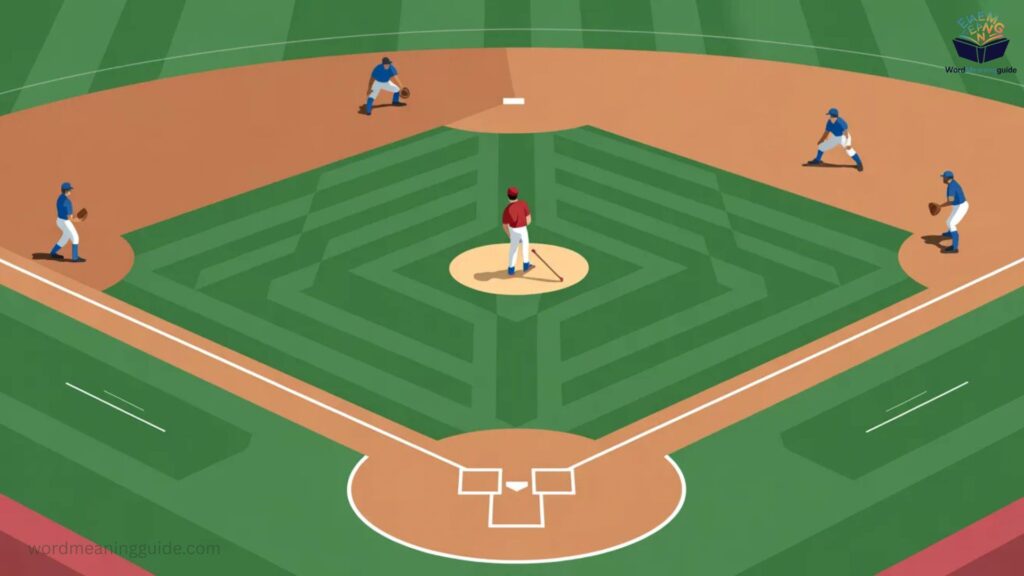
The “bases” metaphor draws directly from the sport of baseball. In baseball, a player starts at home plate and must advance through first, second, and third base before returning home to score a run. The progression is clear, sequential, and goal-oriented.
Relationship “bases” borrowed this structure to describe the progression of physical intimacy. Just as in baseball, you move from base to base — each one representing a deeper level of physical closeness. “Second base” falls naturally in the middle of that progression.
The metaphor appealed to teenagers and young adults because it turned something personal and sometimes embarrassing into a sports analogy — fun, competitive, and conversational. It let people discuss private experiences using public language everyone already understood.
What Are the Bases of Dating?
Before diving deeper into second base specifically, it helps to understand where it sits in the broader framework. The dating bases typically break down like this:
First Base — Kissing, including open-mouth or “French” kissing.
Second Base — Touching or groping above the waist; often includes fondling the chest or breasts.
Third Base — Manual or oral stimulation below the waist.
Home Run (or Home Base) — Sexual intercourse.
Strikeout — When someone attempts to advance but is turned down or unsuccessful.
Each base represents not just a physical act, but a milestone in the developing intimacy between two people. The framework is not a rulebook — it’s a metaphor. Real relationships rarely follow a tidy, linear progression, and that’s perfectly normal.
Origin and History of Second Base
The baseball-intimacy metaphor has been part of American slang since at least the 1930s and 1940s. Early references appear in youth culture, locker room talk, and coming-of-age literature of the mid-twentieth century.
By the 1950s and 1960s, the “bases” language had become widely recognized across American high schools and colleges. It was a way for young people to discuss intimacy using coded language that could slip past adults — especially parents and teachers.
The 1980s and 1990s saw the metaphor reach mainstream popular culture through movies, television, and music. Films like “Fast Times at Ridgemont High” and countless teen comedies of the era referenced the bases openly, cementing their place in cultural vocabulary.
By the 2000s, the internet helped spread the metaphor globally. What was once distinctly American slang became recognizable in the UK, Australia, Canada, and beyond — though with regional variations in exact definitions.
Explore more WSG Meaning in Text (2026): Definition, Examples & How to Use It
Today, in 2026, the metaphor persists, though it increasingly shares space with more direct, sex-positive language. Younger generations are gradually moving away from coded terms, but “second base” still shows up regularly in conversation, media, and online discussions.
What Happens at Second Base? (Clear Breakdown)
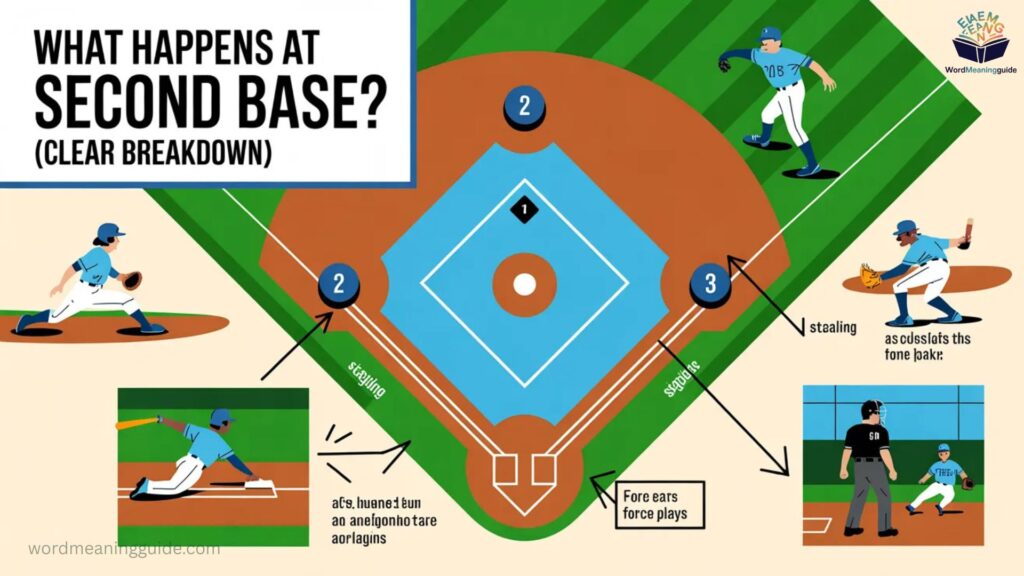
Let’s be clear and direct here, because vagueness is exactly what causes confusion.
Second base typically involves:
Touching, caressing, or fondling a partner’s torso — most commonly the chest or breasts — whether over clothing or underneath it. This can happen through kissing sessions that become more exploratory, or during a moment of deliberate physical intimacy between two people who have agreed (explicitly or implicitly) to go beyond simple kissing.
What second base is NOT:
It does not involve touching below the waist (that is third base territory). It does not include oral or manual genital stimulation. And importantly, it does not automatically mean the encounter will progress further — many couples spend time at second base for weeks, months, or even longer before deciding whether to move on.
The emotional dimension matters too.
For many people, reaching second base feels significant. It represents a shift in a relationship — a mutual acknowledgment that both partners are comfortable with a deeper level of physical intimacy. Relationship therapist Dr. Laura Berman has noted that physical milestones in early relationships carry enormous emotional weight, particularly for adolescents who are building their first frameworks of intimacy and trust.
Don’t miss this BSF Meaning: Simple Definition, Full Form, Examples, and Usage Guide In 2026
Real-Life Examples of Second Base (With Explanation)
Example 1 — The High School Couple
Mia and Jake had been dating for three weeks. They had kissed a few times, but one evening while watching a movie at Jake’s house, things became more intimate. Jake gently touched Mia’s side, and she leaned closer. The evening progressed to gentle touching above the waist — their first experience at second base. Afterward, Mia texted her best friend: “We reached second base tonight.” Her friend knew exactly what she meant.
Example 2 — The College Experience
At a college party, two people who had been flirting for weeks found a quiet moment alone. Their kissing deepened, and hands began to explore. No words were exchanged, but both were comfortable with what was happening. Later, one of them described the encounter to a roommate using the same baseball metaphor — simple, understood, no awkward details required.
Example 3 — The Adult Relationship
Even adults use the term, though often with a wink. A 30-something woman telling her friends about a new relationship might say, “We’ve made it to second base” as a lighthearted way of signaling things are progressing physically without going into specifics. The term carries a playful nostalgia that adults often appreciate.
Short Dialogues Using “Second Base”
Dialogue 1:
“So how did the date go?” “Pretty well! We definitely hit second base.” “Nice! Are things getting serious?”
Dialogue 2:
“I think I like him, but I’m not ready to go past second base yet.” “That’s totally fine. Set your own pace.”
Dialogue 3:
“We’ve been dating for a month and we’re still at first base.” “There’s no rush. Take your time.”
These dialogues show how naturally the term flows into everyday conversation — acting as a shorthand for experiences that might otherwise require much more delicate or detailed explanation.
Second Base Meaning for Different People
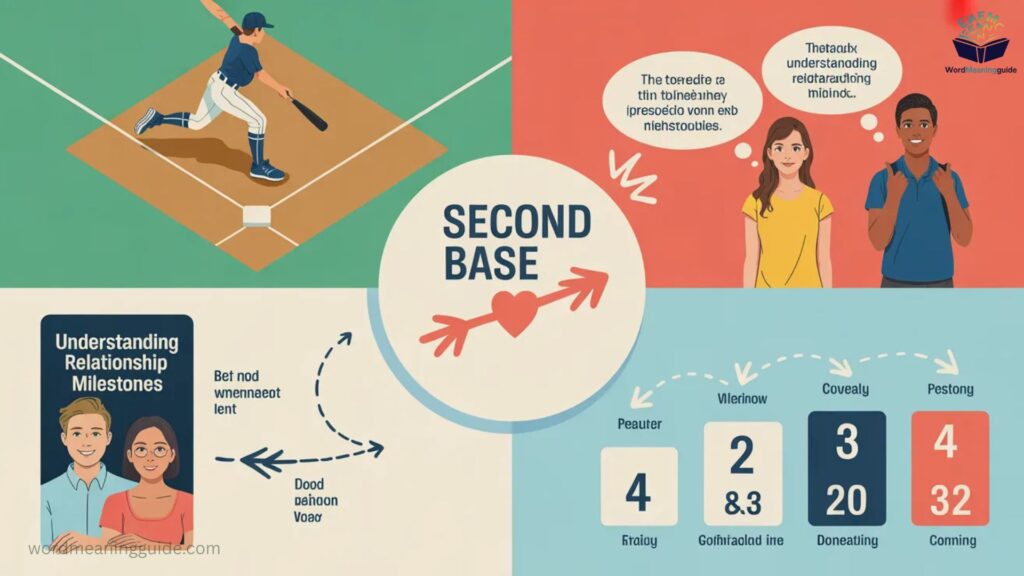
Not everyone defines second base the same way, and that’s part of what makes the metaphor both useful and occasionally confusing.
For teenagers, second base often feels like a major milestone — a first experience of physical intimacy beyond kissing. It can carry enormous emotional significance, tied up with identity, self-image, and the desire to fit in socially.
For young adults, the term is often used more casually, sometimes even ironically. The bases are familiar cultural territory, and second base might be described with less gravity — though the underlying experience still matters.
Explore now WYF Meaning in Text: The Complete Guide to Understanding This Popular Slang In 2026
For adults in their 30s and beyond, the term often carries a nostalgic quality. It’s a throwback to adolescent language, used humorously or affectionately to describe the early stages of a new relationship.
For LGBTQ+ individuals, the baseball metaphor can feel like it doesn’t quite fit — it was designed with heterosexual experiences in mind, and the “bases” don’t always translate cleanly to same-sex or non-binary relationships. Many in these communities have adapted the metaphor, abandoned it, or replaced it with more inclusive language.
Culturally, the term is most strongly rooted in American and English-speaking contexts. In many other cultures, intimate milestones are described in completely different ways, or not discussed openly at all.
Personality Traits of People Who Use the Term “Second Base”
The people who reach for “second base” in conversation tend to share a few common traits.
They tend to value humor and indirectness when discussing sensitive topics. Using a sports metaphor is a way of creating emotional distance — laughing about something rather than being vulnerable about it.
They are often socially aware, knowing that the term signals belonging to a shared cultural vocabulary. Using it correctly communicates social fluency.
They may also be private people who prefer coded language over explicit discussion. The bases allow them to share information without oversharing.
Interestingly, psychologists who study adolescent communication note that coded language around intimacy often serves as a coping mechanism — a way of processing new emotional territory through familiar, low-stakes vocabulary.
Modern Usage of Second Base (Updated for 2026)
In 2026, the term “second base” is still very much in use, but the cultural landscape around it has shifted considerably.
The rise of sex-positive education and more open conversations about consent have encouraged many young people to use clearer, more direct language when discussing physical intimacy. Terms like “we were making out and things got more physical” are increasingly common alternatives.
Social media and dating apps have also changed how people talk about intimacy. Platforms like TikTok and Instagram have hosted thousands of conversations about relationships, consent, and physical boundaries — many of which deliberately move away from coded language in favor of transparency.
Start reading FRL Meaning in Text: The Complete Guide to This Popular Slang Term In 2026
Still, the bases persist. A 2023 survey conducted by a prominent relationship research journal found that over 70% of American adults aged 18–35 were familiar with the bases metaphor and had used it at some point in their lives. Familiarity with the term cuts across gender, education level, and geography.
The metaphor’s endurance speaks to something real: humans love coded language, and the bases give people a comfortable, familiar way to discuss something that can otherwise feel quite exposed.
Second Base vs First and Third Base
Understanding second base requires knowing how it fits between its neighbors in the progression.
First Base vs Second Base: First base (kissing) is often the easiest step — the most universally accepted, least vulnerable, and most commonly practiced form of physical intimacy between romantic partners. Second base goes further, involving touch that is more deliberately sensual and more physically revealing. The emotional leap from first to second base can feel significant, especially for younger people.
Second Base vs Third Base: Second base stays above the waist. Third base crosses into genital territory — manual or oral stimulation. This distinction is important both physically and emotionally. Many people who are comfortable at second base feel they need more trust, more time, or a more serious commitment before moving to third.
The progression from first to third represents an emotional deepening as much as a physical one. Each base demands greater vulnerability, greater trust, and (ideally) clearer communication between partners.
Common Mistakes and Misconceptions
Misconception 1: Everyone agrees on the exact definition. They don’t. Definitions shift by region, age group, and personal experience. What one person calls second base, another might call first or third. Always clarify if you’re unsure.
Misconception 2: Reaching second base means you must go further. Absolutely not. Physical intimacy is not a conveyor belt. Reaching any “base” carries no obligation to continue. Every step should be enthusiastically mutual.
Misconception 3: The bases apply equally to all relationship types. The metaphor was originally designed around heterosexual, cisgender experiences. It doesn’t map perfectly onto LGBTQ+ relationships, and many people in those communities rightly point this out.
Misconception 4: Getting to second base means a relationship is serious. Not necessarily. Two people can experience physical intimacy without being in a committed relationship. The bases describe physical milestones, not emotional ones — though the two are often deeply connected.
Misconception 5: Talking about the bases is immature. The metaphor is rooted in youth culture, but it’s used by people of all ages. There’s nothing immature about having a shared vocabulary for discussing intimacy — as long as it’s used respectfully.
Keep reading OTS Meaning in Text (2026) Explained – Real Meaning & Facts
What Are the Four “Bases” in a Relationship?
Here is a detailed breakdown of each base for complete clarity.
First Base = Kissing
First base is kissing — from a simple closed-mouth kiss to deeper, more passionate open-mouth kissing. It is the most common starting point for physical intimacy in romantic relationships and is widely practiced across cultures and age groups.
Kissing activates a cascade of neurochemical responses. Research published in various psychology and biology journals has noted that kissing releases oxytocin (the bonding hormone), dopamine (associated with pleasure), and serotonin (linked to mood elevation). Even a first kiss between new partners can create a powerful sense of connection.
First base is often the moment a friendship or flirtation officially becomes romantic. It signals mutual attraction and a willingness to pursue something deeper.
Second Base = Touching
As described throughout this article, second base involves touching above the waist — particularly the chest, back, and torso. It represents a step beyond kissing into more deliberate physical exploration.
Second base can happen over or under clothing, and the experience varies enormously depending on the people involved, their comfort levels, and the context of the relationship. For many people, second base is accompanied by heightened emotional intensity — a mix of excitement, vulnerability, and connection.
Third Base = Stimulation
Third base involves manual or oral stimulation of genitals. It represents a significant escalation in physical intimacy and typically requires a higher level of trust and communication between partners.
For many people, third base is a meaningful milestone — often tied to feelings of emotional readiness, relationship security, and mutual desire. Sex educators and therapists consistently emphasize that reaching third base (and beyond) should always be a mutual, enthusiastic, and informed decision.
Home = Intercourse
Home plate, or the “home run,” refers to sexual intercourse. In the original metaphor, it represents “scoring” — completing the full circuit of physical intimacy.
In modern, health-centered conversations, the home run is understood not as a “goal” or achievement but simply as one possible expression of physical intimacy between consenting adults who are ready for that level of connection.
Strikeout
A strikeout occurs when someone attempts to advance to a base — any base — and is declined. In baseball terms, three strikes and you’re out. In relationship terms, a strikeout is simply a rejection, which is a completely normal, healthy, and important part of human interaction.
Handling rejection gracefully is one of the most important social skills in romantic life. A strikeout is not a failure of the person who was rejected — it is simply a mismatch of timing, desire, or readiness.
Is Second Base a Big Deal?
The honest answer: it depends entirely on the person.
For a 15-year-old experiencing their first physical relationship, reaching second base can feel earth-shaking — a major milestone in their developing identity and sense of self. For a 35-year-old in a long-term relationship, it’s simply a comfortable, familiar expression of affection.
What matters is not where the moment falls on a cultural scale, but how it feels to the individuals involved.
Also Read This 111 Meaning in Love – (2026) Simple Definition, Signs, and Real-Life Examples
Relationship counselors consistently note that the significance of any physical milestone should be determined by the people experiencing it, not by outside cultural expectations. If second base feels important to you — it is. If it feels casual — that’s valid too. What’s never appropriate is pressuring a partner to feel differently about their own experience.
Second Base in Teen vs Adult Relationships
The same physical act can carry very different weight depending on the ages and life stages of the people involved.
In teen relationships, second base often occurs in the context of first romantic experiences. Adolescent brains are still developing the emotional regulation and decision-making centers needed to fully process these moments. This is why sex education and open communication with trusted adults is so important during this stage. Teens who feel informed, respected, and unrushed have healthier relationship outcomes according to multiple studies in adolescent psychology.
In adult relationships, second base is often revisited in the early stages of new partnerships. Even experienced adults experience the excitement and vulnerability of early physical intimacy. The difference is usually a greater capacity for communication — adults are (ideally) more comfortable expressing their needs, boundaries, and feelings.
Regardless of age, the underlying principles remain the same: mutual enthusiasm, clear communication, and respect for boundaries.
How to Talk About Second Base Respectfully
Language matters. Here are some principles for discussing physical intimacy — including second base — in a way that respects everyone involved.
Use “we” language, not score-keeping language. The sports metaphor can make intimacy sound competitive or transactional. When talking to a partner, focus on the shared experience rather than on “progress.”
Check in with your partner. Rather than assuming what someone wants or expects, simply ask. “Is this okay?” or “How are you feeling?” goes a long way toward building trust.
Respect differing definitions. Since the bases mean different things to different people, having an explicit conversation about what each person means can prevent misunderstandings.
Avoid the “strikeout” mindset. A partner setting a limit is not a rejection of you as a person — it’s an expression of their own comfort level, which deserves respect.
Keep shared conversations private. Discussing intimate milestones with friends is normal and human. But be mindful of your partner’s privacy. Some people are comfortable having their experiences shared; others are not. Ask before you tell.
Should You Use the Term “Second Base”?
Whether to use the term depends on context, audience, and intention.
Good contexts for using it: Casual conversations with close friends who share the same cultural vocabulary; lighthearted, nostalgic discussions about past relationships; contexts where direct language might feel overly clinical or awkward.
Contexts where clearer language might serve better: Conversations with a romantic partner about your actual desires and boundaries (where directness builds trust); discussions with teenagers about consent and healthy relationships (where coded language can obscure important nuances); cross-cultural conversations where the metaphor may not be understood.
The term is not problematic in itself — but like any coded language, it has limits. It works best when both parties share the same definition and when it’s used with warmth and humor rather than as a way of reducing a partner to a score on a metaphorical scoreboard.
Freqiently Asked Questions
What Are the Four Relationship Bases?
The four relationship bases are: First base (kissing), Second base (touching above the waist), Third base (oral or manual genital stimulation), and Home run (sexual intercourse). Some frameworks also include “strikeout” to describe an unsuccessful attempt to advance. These bases are metaphors borrowed from baseball and are most common in American English, though they are recognized in many English-speaking countries.
What Are the Three Key Components of Healthy Relationships?
Most relationship psychologists and therapists point to three core components of healthy relationships: Communication (the ability to express needs, feelings, and boundaries honestly and kindly); Respect (honoring your partner’s individuality, limits, and personhood); and Trust (the confidence that your partner has your best interests at heart and will be honest with you). Physical intimacy, including navigating the bases, is healthiest when these three components are firmly in place.
What Are All of the Relationship Bases?
All of the relationship bases include: First base (kissing), Second base (above-the-waist touching), Third base (below-the-waist stimulation), and Home run or Home plate (sexual intercourse). Some extended versions add a “Grand Slam” for especially intense or memorable sexual experiences, and “Strikeout” for a rejected advance. It’s worth noting that definitions vary, and the same terms may mean slightly different things to different people.
What Is the First Base in a Relationship?
First base in a relationship refers to kissing — ranging from a simple peck to deep, passionate kissing. It is typically the first physical milestone in a romantic relationship and represents a mutual acknowledgment of attraction and romantic interest. For many people, the first kiss is one of the most emotionally memorable moments in any relationship, regardless of age or experience.
Conclusion
The phrase “second base meaning in a relationship” might seem like a simple question, but as this guide has shown, the answer is layered with cultural history, emotional significance, generational nuance, and personal meaning.
Second base — touching above the waist — is more than just a physical act. It’s a milestone. A moment of vulnerability and closeness. A step in the ongoing dance of physical intimacy that takes different shapes for every couple, in every stage of life.
What matters most is not where you are on the metaphorical baseball diamond, but how you got there: with communication, mutual enthusiasm, respect for boundaries, and genuine care for the person you’re with. The bases are a map, not a mandate. Move at your own pace, with your own compass.
Whether you’re using the term with a wink, explaining it to a curious teenager, or simply trying to understand what it means — now you have the full picture. Play your own game, on your own timeline.

Mr. Yaseen is a passionate content creator and language enthusiast dedicated to making words simple and meaningful for everyone. As the author behind WordMeaningGuide.com, he focuses on delivering clear, accurate, and easy-to-understand definitions that help readers improve their vocabulary and communication skills. With a keen eye for detail and a love for language, Mr. Yaseen ensures every piece of content is user-friendly, informative, and valuable for learners of all levels.