Texting moves fast, and new slang shows up almost every year. Among these short forms, PU in text is one of those abbreviations that often confuses people the first time they see it.
At first glance, it might look playful, random, or even like a hidden message. You may notice it in Snapchat stories, Instagram captions, or quick chat replies where people use short words to get attention or start a conversation. That’s exactly why so many users search for its meaning—they want to understand what the sender really intends.
What Does “PU” Mean in Text?
The most common meaning of PU in texting is:
PU = Pop Up
Meaning: Message me privately or start a chat
It is usually used when someone wants to invite others into a private conversation. For example:
- “Bored. PU 😴” → Message me, I want to talk
- “PU if you’re online 👀” → Start a chat with me
You’ll often see PU on platforms like Snapchat, Instagram, TikTok comments, WhatsApp statuses, and casual messaging apps where short, fast communication is common.
However, PU is not limited to just one meaning.
Different Meanings of PU in Text (Context-Based)
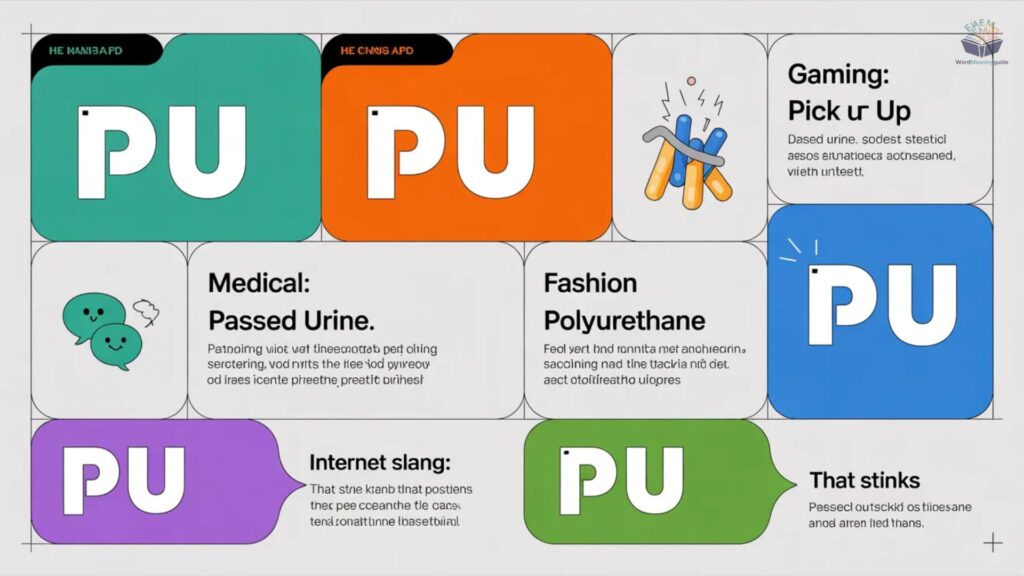
The meaning of PU can change depending on the situation:
- PU = Pop Up → Invite to message privately
- PU = Pick Up → Answer or collect something (call/logistics)
- PU = Pull Up → Come over or meet someone
- PU = Power Up → Gaming or device upgrade context
- PU = Put Up → To arrange or host something
- PU = “Pew” (sound expression) → Used to show bad smell or reaction
Looking for the perfect LTR Meaning in Text? Explore our full collection here.”
This is why context is everything. The same two letters can carry completely different meanings depending on who is texting and where it is used.
How PU Meaning in Text Evolved in Messaging Culture
The slang “PU” didn’t become popular overnight—it slowly developed as texting culture shifted toward faster, shorter communication.
In early SMS culture, people naturally started shortening phrases to save time and characters. As social media platforms like Snapchat and Instagram grew, PU found a new identity as a quick way to invite private conversation, especially through stories, captions, and swipe-based interactions.
Later, influencers and online creators began using it as a casual call-to-action, encouraging followers to message them instantly. Over time, younger users adopted it because it felt simple, playful, and sometimes flirty—without directly expressing strong emotions.
In modern texting culture, PU often works as a soft digital invitation. Instead of clearly saying “talk to me,” it creates a subtle way to open conversation without sounding too direct.
Why Context Changes the Meaning of PU in Text
The meaning of PU can shift completely depending on context, and that’s what makes it tricky.
| Factor | What It Changes | Example |
| Platform | Purpose of use | Snapchat = DM invite, Gaming = Power Up |
| Relationship | Tone of message | Friends = casual, strangers = unclear |
| Emotion/Tone | Intention behind message | “PU now” may feel urgent or playful |
| Timing | Meaning impact | Late-night PU often feels flirty or personal |
Simple rule to remember:
- On stories or posts → usually “Pop Up” (message me)
- In instructions or actions → could mean Pick Up or Pull Up
Context is everything—without it, PU is just two letters with multiple interpretations.
“Discover creative and unique White Heart Emoji Meaning ideas in our ultimate guide.”
PU Meaning Across WhatsApp, Instagram, TikTok & Snapchat
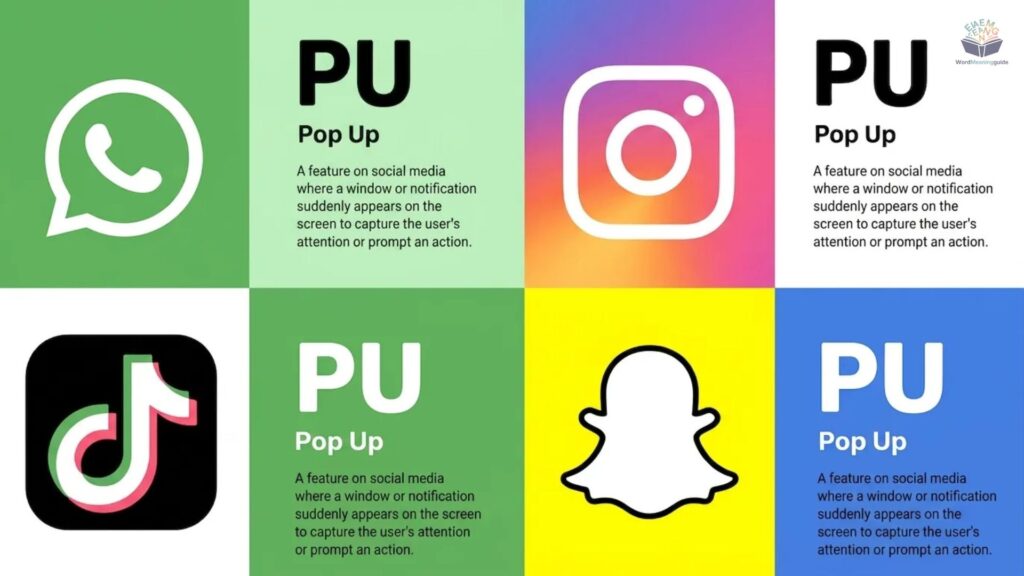
Although PU in text generally carries the same idea of initiating contact, its usage can slightly shift depending on the platform where it appears.
- WhatsApp:
Commonly used in private chats between friends. It usually means “message me” or “reply when you can.” - Instagram:
Often seen in DMs or story replies. Here, PU may act as a casual prompt to start a conversation or continue a chat. - TikTok:
Frequently appears in comments or captions, where it is used as a short way of saying “DM me” or “reach out.” - Snapchat:
One of the most common platforms for this slang. PU typically means “snap me” or “message me back.”
👉 In all cases, the tone and intent depend on context, not just the abbreviation itself.
Different Meanings of PU in Other Fields
Outside of texting and social media, PU can have completely different meanings across various industries and subjects.
- Education: Public University
- Science/Material Science: Polyurethane (a type of plastic material)
- Gaming: Power Unit
- Finance: Per Unit (used in pricing or cost breakdowns)
“Check out our curated SMT Meaning in Text collection for instant inspiration.”
Because of these variations, PU can easily be misunderstood if the context is not clear. The same two letters can represent completely unrelated concepts depending on where they are used.
Why Understanding PU Meaning in Text Matters Today
Language is changing faster than ever in the digital world. Every year, new abbreviations and slang terms appear, shaping how people communicate across messaging apps and social media platforms.
When you don’t understand a term like PU in text, you may easily miss the real meaning behind a message. Something as simple as “PU for details” could be an invitation, update, or important follow-up—but without context, it can be misunderstood or ignored.
In modern communication, speed and simplicity matter. Short forms are now a normal part of online conversations, and recognizing them helps you stay connected and informed.
Understanding slang like PU allows you to:
- Stay socially aware
- Avoid confusion in chats
- Respond confidently
- Communicate more naturally
It’s not about following trends—it’s about understanding how people actually talk online today. When you understand digital language clearly, your communication becomes smoother, faster, and more confident.
Is PU Always Appropriate in Text?
No, PU is not suitable for every situation.
It generally belongs to casual, informal, or social conversations where tone is relaxed. In many cases, it simply means:
👉 “Message me privately” or “start a chat”
However, overusing it can sometimes:
- Look attention-seeking
- Feel unclear or spam-like
- Create misunderstandings
- Appear unprofessional in formal spaces
That’s why it’s important to understand where and how it fits before using it.
“Boost your creativity with our extensive TB Meaning in Text list and tips.”
When You Should Avoid Using PU
It’s better to avoid PU in serious or professional communication, such as:
- Workplace or manager conversations
- Client or business messaging
- Formal or first-time introductions
- Sensitive discussions
- Situations where clarity is more important than slang
In short, PU works best in casual digital spaces, not structured or professional environments.
Potential Red Flags When Using PU in Text
While PU in text is often used casually, certain situations can make it feel uncomfortable or inappropriate—especially when context is missing.
Some warning signs include:
- A stranger saying “PU” with no explanation
- PU combined with intense or aggressive emojis
- Repeated messages asking someone to “PU” quickly
- PU used in a way that pressures private conversation
❌ Example of poor communication:
- “Why aren’t you PU already 😬”
In digital communication, consent and comfort always matter. Just like in real-life conversations, online interactions also need boundaries and respect.
“Find the best MYF Meaning in Text for every occasion in this handy guide.”
Professional Alternatives to “PU” in Text
In work or formal settings, PU is too vague and unprofessional, so clearer phrases are better:
| Situation | Better Alternative |
| Need a reply later | “Please reply when you’re available.” |
| Private clarification | “Let’s continue this in a direct message.” |
| Scheduled talk | “Can you message me at 3 PM?” |
| Follow-up request | “Please send me an update via message.” |
These options keep communication clear, respectful, and professional.
Casual & Friendly Alternatives to PU
Instead of PU, people often use more natural phrases depending on tone:
😊 Friendly options:
- “DM me”
- “Hit me up”
- “Text me later”
- “Ping me”
😄 Playful options:
- “Slide into my DMs”
- “Talk to me 😄”
- “I’m here, message me”
🎮 Gaming-style options:
- “Join my lobby”
- “Hop in chat”
- “Queue up with me”
✨ Short slang alternatives:
- HMU (Hit Me Up)
- PM me (Private Message me)
- MSG me
“Want more inspiration? Check out our top SM Meaning in Text suggestions.”
Choosing the right phrase depends on your personality and relationship with the other person.
Origin and Background of the Term “PU”
The expression “pop up” has been part of everyday language for many years. Traditionally, it was used to describe something appearing suddenly—such as a pop-up window on a computer screen or an unexpected visual element.
As digital communication evolved, people began shortening common phrases to save time while typing. In this process, “pop up” gradually turned into “PU” in informal texting culture, especially among users on platforms like Snapchat, Instagram, and WhatsApp.
This transformation follows a larger pattern in internet language, where speed and convenience shape how words are written.
Examples of similar shortcuts include:
- “Be right back” → BRB
- “Laughing out loud” → LOL
- “Direct message” → DM
In the same way, “pop up” became PU, fitting naturally into fast-paced online conversations. Over time, it became widely used in casual chats, especially among younger audiences.
How PU Is Used in Daily Life
In real conversations, PU is mainly used in informal digital communication, where quick interaction is preferred.
Common usage examples:
- Requesting a message
- “PU when you get home.”
- Starting a private conversation
- “PU, I need to tell you something.”
- Checking availability
- “PU if you’re free tonight.”
- Following up
- “I’ll PU tomorrow with details.”
- Social or informal invites
- “PU for collaboration.”
Looking for the perfect ATP Meaning in Text? Explore our full collection here.”
Across all these cases, the core idea remains the same: it’s a signal to initiate contact or continue communication.
However, it is important to note that PU is rarely used in formal environments. In professional emails or workplace communication, it would sound unclear or unprofessional compared to full phrases like “please message me.”
Emotional or Practical Meaning of PU
Although PU looks like a simple abbreviation, it often carries subtle emotional meaning in conversations.
When someone says “PU”, they are usually creating an opening for communication. Depending on tone and context, it can suggest:
- Curiosity
- Interest
- Urgency
- Privacy
- Personal attention
For example:
- “PU, it’s important.”
This feels more immediate and personal than simply saying “message me.” In digital communication, short forms like this often create a sense of closeness and familiarity between users.
That emotional nuance is one of the reasons understanding slang like PU is important in modern texting culture.
Similar or Related Terms
Several other abbreviations carry similar meanings but differ in tone and usage:
- DM → Direct Message (social media-specific)
- PM → Private Message (forums or older platforms)
- HMU → Hit Me Up (friendly and energetic tone)
- Text me → Clear and direct communication
- Ping me → Often used in professional or tech settings
“Discover creative and unique IMK Meaning in Text ideas in our ultimate guide.”
Key difference:
👉 PU is more casual and informal, often used in relaxed conversations rather than structured communication.
Common Misunderstandings About PU
Many people misinterpret PU because of its simplicity and multiple possible meanings.
Common myths clarified:
- ❌ “It always means something smells”
✔ In texting, it does NOT refer to smell. - ❌ “It’s just a typo”
✔ Usually it is intentional slang, not a mistake. - ❌ “It is professional language”
✔ It should NOT be used in formal or business communication. - ❌ “It always has romantic intent”
✔ Not necessarily—it often just means “message me.” - ❌ “Everyone understands it the same way”
✔ Interpretation depends on age, platform, and context. - ❌ “It always means pick up”
✔ That meaning exists, but it is less common in modern texting.
20+ Example Replies to “PU” Messages
Here are ready-to-use responses based on different moods and situations:
🟢 Friendly Replies
- “Sure, I’ll pop up 🙂”
- “Messaging you now”
- “Hey, what’s up?”
💛 Playful / Flirty Replies
- “Only if you bring snacks 😏”
- “You sure you’re ready for this DM?”
- “Missed me already?”
💼 Polite / Neutral Replies
- “Sure, I’ll message you shortly”
- “Let’s talk in a moment”
- “I’ll reach out soon”
🧊 Reserved / Boundaries
- “What’s it about?”
- “I prefer to talk here for now”
- “Maybe later, not available”
Also Read This DTF Meaning in Text Explained (2026 Update): Full Form, Usage & Real Examples
👉 Your reply sets the tone—so always respond in a way that matches your comfort level.
Safety Notes: When PU Feels Suspicious
Not every message is harmless. Sometimes PU can be used in unsafe or manipulative ways, especially online.
Be cautious if you notice:
- Unknown or fake-looking accounts
- Requests to move conversation quickly to private chat
- Vague promises like “PU for surprise”
- Avoidance of direct questions
Safe boundary examples:
- “I prefer staying here for now.”
- “I don’t chat privately with strangers.”
- “Please don’t contact me again.”
Online safety should always come before curiosity or pressure.
How PU Meaning Changes by Platform
| Platform | Meaning | Tone |
| Snapchat | Pop Up (DM me) | Casual / flirty |
| Private message invite | Social / trendy | |
| TikTok | Engagement prompt | Meme / creator-driven |
| Context-based | Personal chats | |
| Gaming chats | Power Up | Competitive context |
Simple Rule to Avoid Confusion
Before using or replying to PU, follow this quick check:
- Who is the sender? (friend or stranger)
- Where is it used? (social media, chat, work)
- What is the tone? (fun, serious, unclear)
👉 If there’s any confusion, always choose clear wording over slang.
Frequently Asked Questions
What does PU mean in text messages?
PU usually means “Pop Up,” which is a casual way of saying message me or start a chat in texting and social media.
Is PU a slang word or a real abbreviation?
PU is an informal slang abbreviation used online. It mainly stands for “Pop Up” in chat contexts, but meaning depends on usage.
Why do people say PU instead of message me?
People use PU because it is short, fast, and fits social media culture, where quick communication is more common than full sentences.
Is PU used on Snapchat and Instagram?
Yes, PU is commonly seen on Snapchat, Instagram, and TikTok, usually meaning “DM me” or “text me.”
Can PU have different meanings in text?
Yes, depending on context PU can also mean Pick Up, Pull Up, Power Up, or even Put Up, but “Pop Up” is the most common in chats.
Is PU a flirty or friendly message?
It can be both. PU may sound friendly, casual, or slightly flirty depending on emojis, tone, and relationship.
Is it safe to use PU in conversation?
Yes, but only in informal chats. It should be avoided in professional or formal communication.
What should I reply when someone texts PU?
You can reply with something like “Hey, what’s up?” or “I’m here, talk to me” depending on your comfort level.
Why is PU confusing in text messages?
PU is confusing because it has multiple meanings across different contexts, and its interpretation depends heavily on situation and platform.
Is PU still popular in 2026 texting culture?
Yes, PU is still used in casual social media chats and messaging apps, especially among younger users and online communities.
Conclusion
Understanding PU meaning in text is more than just learning a slang term—it’s about staying in tune with how modern conversations actually happen online. In a world where messages are short, fast, and full of hidden meanings, knowing what PU stands for helps you instantly decode intent and respond without confusion.
Whether it’s used to start a chat, signal attention, or simply keep a conversation flowing, PU shows how digital language keeps evolving. Once you understand it, you don’t just read messages—you understand the tone behind them, giving you more confidence, clarity, and control in every online interaction.

Mr. Yaseen is a passionate content creator and language enthusiast dedicated to making words simple and meaningful for everyone. As the author behind WordMeaningGuide.com, he focuses on delivering clear, accurate, and easy-to-understand definitions that help readers improve their vocabulary and communication skills. With a keen eye for detail and a love for language, Mr. Yaseen ensures every piece of content is user-friendly, informative, and valuable for learners of all levels.