Imagine someone walking into a tense meeting, quietly defusing the conflict with a few calm words. That person isn’t just “nice” — they possess something research has spent decades trying to define. Most of us call it emotional intelligence.
But what if that phrase doesn’t fit the moment? Writing a resume, coaching a colleague, or explaining the concept to a teenager — sometimes “emotional intelligence” feels too clinical or overused. According to TalentSmart, EQ accounts for 58% of performance across all job types, yet many people struggle to talk about it naturally.
That’s what this guide solves. You’ll find 25+ precise alternatives — formal, informal, and professional — complete with context, mini dialogues, expert insight, and a comparison table.
What Does “Emotional Intelligence” Mean?
Before we dive into alternatives, it’s worth grounding ourselves in what the phrase actually means.
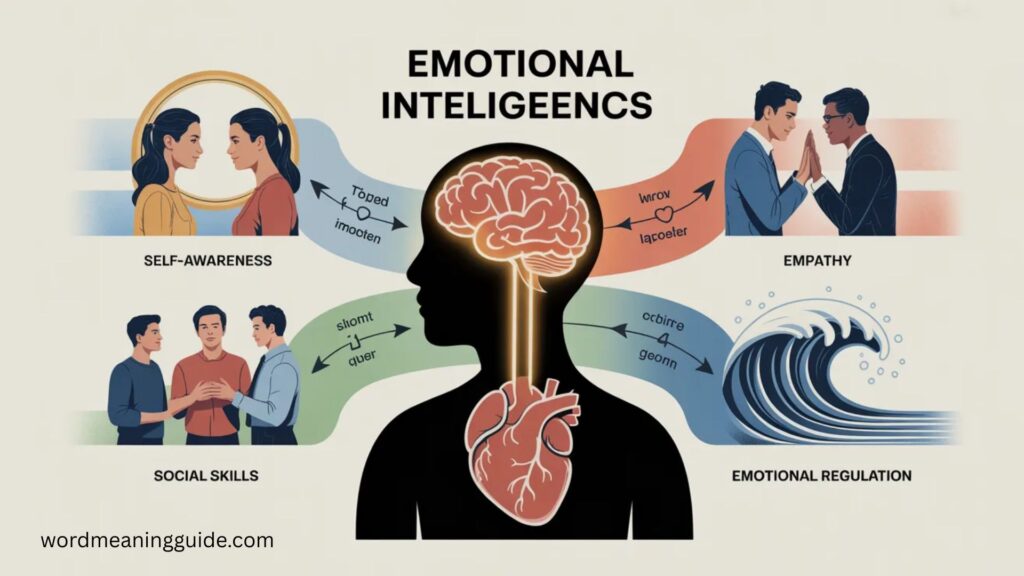
Emotional intelligence (EI), sometimes called emotional quotient (EQ), refers to the ability to recognize, understand, manage, and effectively use emotions — both in yourself and in others. The concept was popularized by psychologist Daniel Goleman in his groundbreaking 1995 book, where he argued that EQ could matter more than IQ in determining success.
Goleman identified five core components: self-awareness, self-regulation, motivation, empathy, and social skills. Together, these form the foundation of how we connect, communicate, and lead.
Psychologists Peter Salovey and John D. Mayer, who first coined the academic term in 1990, defined it as “the ability to monitor one’s own and other’s feelings and emotions, to discriminate among them, and to use this information to guide one’s thinking and actions.”
In short, emotional intelligence is the bridge between knowing how you feel and knowing what to do with that feeling — and doing the same for others.
When to Use “Emotional Intelligence”
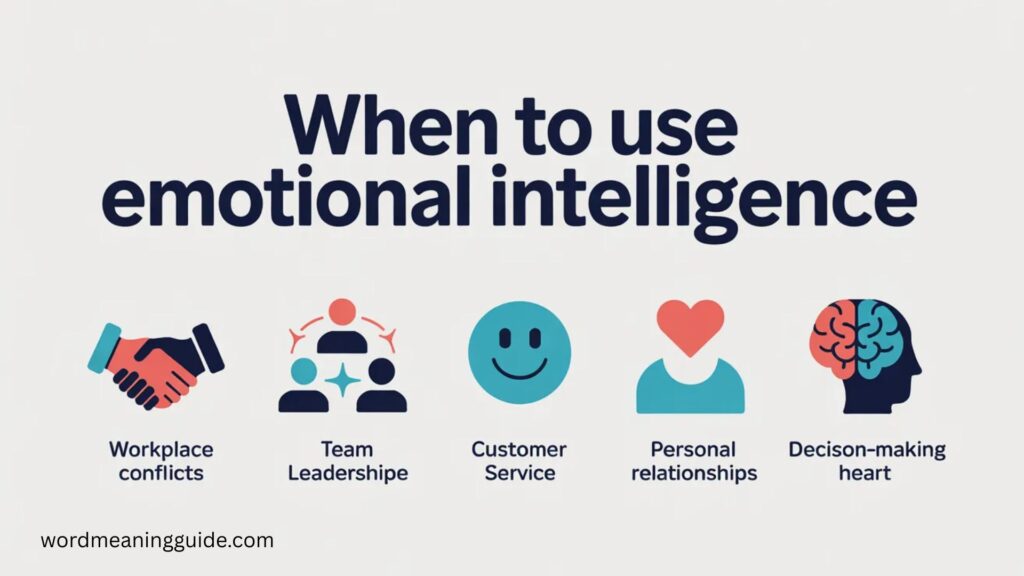
“Emotional intelligence” is a widely recognized term — but it isn’t always the right choice.
Use it when:
- Writing academic papers, research summaries, or clinical assessments
- Referencing Goleman’s model or EQ frameworks directly
- Discussing psychology, neuroscience, or organizational behavior
- Working in HR, coaching, or talent development contexts where the term is standard
Consider an alternative when:
- The audience is unfamiliar with psychological jargon
- You want to sound more natural or conversational
- You’re describing a specific aspect of EI, not the full concept
- The word “intelligence” feels cold, detached, or overly technical for your tone
Is “Emotional Intelligence” Polite or Professional?
The short answer: yes, it is both polite and professional — in the right context.
However, the phrase can sometimes feel jargon-heavy, especially when used excessively or imprecisely. In personal conversations, saying someone “lacks emotional intelligence” can feel harsh or clinical. In a corporate memo, overusing “EI” or “EQ” can come across as buzzword-heavy.
The key is precision. Using an alternative that captures a specific dimension — like empathy, self-awareness, or people skills — often lands better than the broad umbrella term.
Explore More Other Ways to Say “I Will Keep You Updated”: Formal, Informal & Professional Alternatives In 2026
Pros & Cons of Using “Emotional Intelligence”
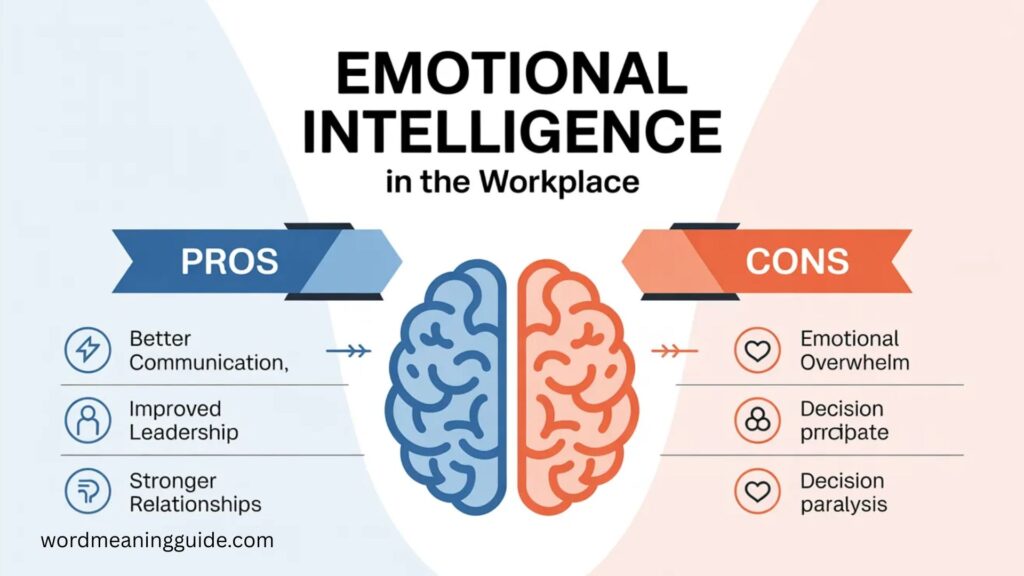
Pros
- Universally recognized in professional and academic circles
- Backed by decades of psychological research
- Captures a wide range of skills in two words
- Effective in HR, leadership, and coaching conversations
Cons
- Can sound clinical or impersonal in casual contexts
- Sometimes perceived as a buzzword
- The word “intelligence” may feel judgmental when applied to others
- May not specify which aspect of EI you’re referring to
Quick Alternatives List: One-Line Phrases Only
Here’s a fast-reference list of 25+ alternatives to “emotional intelligence”:
- Emotional awareness
- Interpersonal intelligence
- Social intelligence
- Empathy skills
- Emotional literacy
- People smarts
- Emotional management
- Relational intelligence
- Self-awareness
- Emotional insight
- Understanding emotions
- Empathic ability
- Emotional competence
- Social acuity
- People skills
- Affective intelligence
- Emotional regulation
- Interpersonal sensitivity
- Empathic intelligence
- Psychological awareness
- Social-emotional skills
- Emotional fluency
- Emotional wisdom
- Human insight
- Soft intelligence
- Feeling-savvy
- Heartfelt intelligence
- Social awareness
12 Key Alternatives to Emotional Intelligence
1. Emotional Awareness
Emotional awareness refers to the ability to recognize and name your own emotions as they arise — and to notice them in others. It’s the foundational layer of emotional intelligence, the starting point before any management or empathy is possible.
This term is particularly useful in therapeutic, educational, and mindfulness contexts. When a school counselor helps students “build emotional awareness,” the phrase feels accessible and non-threatening.
Discover More FNF Meaning: What It Really Means in Chat, Texts, and Social Media (Updated for 2026)
Example in use: “Our leadership development program focuses on building emotional awareness as the first step toward effective team communication.”
Mini Dialogue:
“She barely reacted when the client blew up at her.” “That’s her emotional awareness at work — she recognized his frustration wasn’t really about her.”
Best for: Education, therapy, mindfulness coaching, parenting
2. Interpersonal Intelligence
Coined by developmental psychologist Howard Gardner as part of his Theory of Multiple Intelligences (1983), interpersonal intelligence is the ability to understand and interact effectively with others. It focuses on reading social cues, building relationships, and navigating group dynamics.
This alternative carries academic weight while remaining accessible. It works beautifully in educational settings and leadership assessments.
Example in use: “Candidates with strong interpersonal intelligence consistently outperform peers in client-facing roles.”
Mini Dialogue:
“How does he always know what people need before they say it?” “He’s got extraordinary interpersonal intelligence. He reads rooms better than anyone I’ve met.”
Best for: Academic papers, education, leadership profiling
3. Social Intelligence
Social intelligence is about navigating the social world skillfully — understanding social norms, reading people accurately, and knowing how to behave in different social contexts. Karl Albrecht, in his book Social Intelligence, described it as the ability to “get along with people and to get them to cooperate with you.”
Unlike emotional intelligence, which is partly inward-looking, social intelligence is almost entirely about the external — how you engage with groups, communities, and systems.
Example in use: “Her social intelligence was evident from the way she mediated the conflict between two departments without either side feeling dismissed.”
Mini Dialogue:
“I don’t understand how he networks so effortlessly.” “Social intelligence. He genuinely enjoys people, and it shows.”
Best for: Professional profiles, organizational behavior, marketing, leadership articles
Also Read This 46+ Other Ways to Say “Thanks for Having Me” – Polite, Professional, and Natural Alternatives for Every Situation
4. Empathy Skills
Empathy skills refer specifically to the ability to understand and share the feelings of another person. It’s the most emotionally human of all the alternatives — warm, relatable, and immediately understood by virtually any audience.
There are three types of empathy worth noting: cognitive empathy (understanding someone’s perspective), emotional empathy (feeling what they feel), and compassionate empathy (taking action to help). Using “empathy skills” allows you to get specific.
Brené Brown, one of the world’s foremost researchers on vulnerability and human connection, has said: “Empathy is feeling with people.” That distinction — from sympathy, which is feeling for people — is subtle but profound.
Example in use: “Developing empathy skills is at the heart of our customer service training program.”
Mini Dialogue:
“He sat with her for an hour without offering a single solution.” “That’s what real empathy skills look like — presence without an agenda.”
Best for: Customer service, healthcare, counseling, personal development content
5. Emotional Literacy
Emotional literacy is the ability to identify, understand, and express emotions using appropriate language. The term, popularized by educator Claude Steiner in the 1970s, emphasizes the communicative dimension of emotional intelligence — the idea that emotions have a language, and we can become fluent in it.
This phrase is especially powerful in childhood education and trauma-informed care, where learning to name feelings is literally a developmental milestone.
Example in use: “The school’s curriculum integrates emotional literacy from kindergarten, giving children tools to express their inner world.”
Mini Dialogue:
“My toddler just threw a tantrum without knowing why.” “That’s the journey of emotional literacy — she’ll learn to name those feelings with time and support.”
Best for: Education, child development, trauma-informed practices, parenting
6. People Smarts
This informal, conversational alternative captures the same essence as emotional intelligence but with zero jargon. People smarts is instantly relatable — everyone has met someone who has it, even if they’ve never heard of EQ.
It works beautifully in casual writing, social media posts, or when you’re speaking to an audience that might be put off by clinical language.
Example in use: “Beyond technical skill, we hire for people smarts — candidates who can collaborate, listen, and adapt in real time.”
Mini Dialogue:
“She’s not the most experienced candidate, but something about her stands out.” “People smarts. You can train skills. You can’t train that.”
Best for: Informal writing, social media, casual leadership advice, general audiences
7. Emotional Management
Emotional management zeroes in on the regulation side of emotional intelligence — the ability to control impulses, manage stress, recover from setbacks, and maintain composure under pressure. It’s less about recognizing emotions and more about handling them.
This term is common in corporate wellness and executive coaching contexts. A manager who doesn’t lose their temper in a crisis, who stays present during difficult feedback conversations — that’s emotional management in action.
Example in use: “Executives who demonstrate strong emotional management tend to make better decisions under pressure.”
Mini Dialogue:
“I can’t believe she stayed calm during that board meeting. I would’ve walked out.” “Emotional management. Years of practice and probably a really good coach.”
Best for: Executive coaching, stress management, workplace training, performance reviews
8. Relational Intelligence
Relational intelligence focuses on the quality and depth of one’s relationships — the ability to build trust, repair ruptures, hold healthy boundaries, and maintain long-term connections. This term, often used in couples therapy and organizational psychology, acknowledges that intelligence isn’t just about individual capabilities but about how we show up in relationship.
It’s a nuanced, modern phrase that resonates with anyone who values connection over transaction.
Example in use: “In high-performing teams, relational intelligence is often the invisible architecture behind every successful project.”
Mini Dialogue:
“They’ve worked together for fifteen years and still finish each other’s sentences.” “That’s relational intelligence — they’ve invested deeply in understanding each other.”
Best for: Relationship counseling, team development, organizational psychology, HR
9. Self-Awareness
Sometimes the most specific alternative is the most powerful. Self-awareness — understanding your own thoughts, emotions, strengths, weaknesses, and how you affect others — is arguably the most foundational dimension of emotional intelligence.
Tasha Eurich, an organizational psychologist and author of Insight, found in her research that while 95% of people believe they are self-aware, only 10-15% actually are. That gap is where growth lives.
Example in use: “Strong self-awareness allows leaders to adjust their communication style to meet the needs of different team members.”
Mini Dialogue:
“He keeps making the same mistakes and blaming everyone else.” “Lack of self-awareness. It’s the most expensive blind spot a leader can have.”
Best for: Leadership coaching, performance reviews, personal development, therapy
10. Emotional Insight
Emotional insight suggests a deeper, more reflective quality — the ability not just to notice emotions but to understand their meaning and origin. It’s introspective, almost philosophical, and carries a sense of hard-won wisdom.
Psychologists use this term frequently in cognitive behavioral therapy (CBT) and psychoanalytic contexts, where gaining insight into one’s emotional patterns is the engine of change.
Example in use: “After months of therapy, she developed real emotional insight into why conflict triggered such intense anxiety in her.”
Mini Dialogue:
“How did you know you were pushing people away?” “It took time. Emotional insight isn’t something you rush. It develops quietly.”
Best for: Therapy, reflective writing, personal development narratives, memoir
11. Understanding Emotions
Straightforward, clear, and universally accessible, understanding emotions works well in plain-language communication — instructional content, parenting guides, school programs, and any setting where the goal is clarity over sophistication.
It doesn’t carry the weight of academic prestige, but that’s often its greatest strength. It invites everyone into the conversation.
Example in use: “Our workshop on understanding emotions helps employees build healthier communication habits at work and at home.”
Explore More 45+ Polite Ways to Say “Sorry for the Short Notice” (Formal, Informal & Professional Alternatives 2026 updated)
Mini Dialogue:
“Why does talking about feelings feel so hard?” “Because most of us were never taught. Understanding emotions is a skill — and skills can be learned.”
Best for: Educational programs, plain-language content, workshops, community outreach
12. Empathic Ability
Empathic ability is a slightly more formal version of “empathy skills” — it emphasizes empathy as a capacity or talent that varies across individuals. Used in psychology literature and clinical assessments, it suggests something deeper than a skill — almost an inherent orientation toward the emotional lives of others.
Research from the Max Planck Institute in Leipzig has shown that empathic ability can be trained and strengthened through deliberate practice — a hopeful finding for those who believe they lack natural warmth.
Example in use: “Nurses with higher empathic ability report greater job satisfaction and lower rates of compassion fatigue.”
Mini Dialogue:
“He knew I was struggling before I even opened my mouth.” “That’s his empathic ability — he tunes into people at a frequency most of us miss.”
Best for: Healthcare, clinical psychology, research writing, nursing and social work
Mistakes to Avoid
Using alternatives to “emotional intelligence” well requires care. Here are the most common mistakes to sidestep:
Using terms interchangeably without precision. “Emotional awareness” and “emotional management” are not the same thing. The first is about recognition; the second is about regulation. Using them interchangeably muddies your meaning.
Over-formalizing casual contexts. Saying someone has “strong interpersonal intelligence” in a friendly conversation can feel stiff. Use “people smarts” or “great empathy” when the moment calls for warmth.
Under-formalizing professional contexts. Telling a board of directors that your CEO has “people smarts” might undermine the seriousness of your point. Match your register to your audience.
Implying emotional intelligence is fixed. Phrases like “she just has it” suggest EQ is innate. Research increasingly shows that emotional competencies can be developed — your language should reflect that growth mindset.
Using the word “emotional” as a subtle criticism. In some workplace cultures, calling someone “emotional” carries a negative connotation, particularly toward women. Be deliberate about framing. Alternatives like “self-aware” or “relationally intelligent” can carry the same meaning without the baggage.
Cultural & Tone Tips
Emotional intelligence is a universal human capacity, but the language around it is deeply cultural.
In East Asian cultures, the concept of emotional regulation is often embedded in broader frameworks of harmony, face-saving, and collective wellbeing. Phrases like “social harmony” or “reading the room” may land more naturally than “emotional intelligence.”
In Western corporate culture, EQ and EI are widely accepted terms. However, “people skills,” “self-awareness,” and “empathy” often feel more genuine in performance conversations.
In therapeutic or counseling contexts, precision matters. “Emotional literacy” and “emotional insight” carry clinical connotations that imply depth and deliberate development.
In educational settings for children, simple, concrete language wins. “Understanding feelings,” “being kind,” and “knowing why you’re upset” are more developmentally appropriate than any of the formal alternatives.
Tone also matters. If you’re writing a LinkedIn post, lean casual and direct: “people smarts” or “empathy skills.” If you’re crafting a white paper, “interpersonal intelligence” or “social-emotional competencies” carry more weight. If you’re having a personal conversation, stay human: “she really gets people” or “he’s incredibly aware of how others feel” often says more than any formal phrase ever could.
Comparison Table: Best Alternatives
| Alternative | Formality | Best Context | Focus Area |
| Emotional Awareness | Moderate | Therapy, education, mindfulness | Recognizing emotions |
| Interpersonal Intelligence | High | Academic, HR, leadership | Social understanding |
| Social Intelligence | Moderate–High | Business, networking, research | Group/social dynamics |
| Empathy Skills | Low–Moderate | Customer service, healthcare | Feeling with others |
| Emotional Literacy | Moderate | Education, child development | Naming/expressing feelings |
| People Smarts | Low (informal) | Casual writing, social media | Overall EQ, everyday use |
| Emotional Management | Moderate–High | Corporate, coaching | Regulating emotions |
| Relational Intelligence | High | Psychology, team development | Building relationships |
| Self-Awareness | Moderate | Leadership, coaching, therapy | Knowing yourself |
| Emotional Insight | High | Therapy, reflective writing | Understanding emotion patterns |
| Understanding Emotions | Low | Plain-language content, schools | General emotional knowledge |
| Empathic Ability | High | Clinical, research, healthcare | Capacity for empathy |
FAQs
What is the most professional alternative to “emotional intelligence”?
The most professional alternative depends on the context. For academic or research settings, interpersonal intelligence or social-emotional competence are widely respected. In corporate or HR environments, emotional management or relational intelligence carry strong professional weight. For leadership development specifically, self-awareness is often considered the foundational term in executive coaching literature.
Can “empathy” be used as a substitute for emotional intelligence?
Empathy is a component of emotional intelligence, not a full substitute. Emotional intelligence encompasses self-awareness, self-regulation, motivation, empathy, and social skills. Using “empathy” alone captures only the relational, outward-facing dimension. It works well when that specific aspect is what you’re discussing — but for the full concept, a broader term is more accurate.
Is emotional intelligence the same as people skills?
Not exactly, though the two overlap significantly. “People skills” typically refers to behavioral abilities — how well someone communicates, collaborates, and interacts with others. Emotional intelligence is deeper — it includes the internal processes of recognizing and managing your own emotions, which may or may not be visible in outward behavior. Someone can have polished people skills while still lacking genuine self-awareness.
Which alternative is best for a resume or cover letter?
For a resume or cover letter, clarity and professionalism matter most. Strong choices include interpersonal intelligence, self-awareness, emotional management, or relational intelligence. Avoid overly casual terms like “people smarts” in formal job applications. Better still, show the quality through specific examples rather than naming it directly — describe a time you resolved a conflict, navigated a difficult client, or helped a team through uncertainty.
How do I explain emotional intelligence to a child?
Simplicity wins with children. Try phrases like “understanding your feelings,” “knowing when someone is sad or upset,” or “being able to calm down when you’re angry.” Emotional literacy programs in schools often use characters, stories, and a “feelings vocabulary” to help children name and talk about their inner world. The goal is concrete, age-appropriate language that invites curiosity rather than judgment.
Is emotional intelligence a formal or informal term?
“Emotional intelligence” sits comfortably in the moderate-to-high formality range. It’s appropriate in academic papers, corporate reports, HR documentation, and coaching literature. In casual conversation, it can feel a bit clinical. In those moments, simpler alternatives like “empathy,” “self-awareness,” or “people smarts” tend to connect better.
What do researchers say is the most important component of emotional intelligence?
Research perspectives vary, but many psychologists and leadership experts point to self-awareness as the most foundational component. Without the ability to recognize and honestly assess your own emotional states, all other EI competencies become harder to develop. Daniel Goleman himself ranked self-awareness first among the five domains. Tasha Eurich’s research further emphasized that accurate self-awareness is rarer — and more valuable — than most people realize.
Conclusion:
Language shapes perception. “Emotional intelligence” is a powerful phrase — but not always the right one. Sometimes you need the precision of “self-awareness,” the warmth of “empathy skills,” or the relatability of “people smarts.”
The 25+ alternatives in this guide are not merely synonyms — they’re lenses, each highlighting a different facet of the same deeply human capacity to feel, understand, and connect. Choose the one that fits your moment, and your message will always land more powerfully.

Mr. Yaseen is a passionate content creator and language enthusiast dedicated to making words simple and meaningful for everyone. As the author behind WordMeaningGuide.com, he focuses on delivering clear, accurate, and easy-to-understand definitions that help readers improve their vocabulary and communication skills. With a keen eye for detail and a love for language, Mr. Yaseen ensures every piece of content is user-friendly, informative, and valuable for learners of all levels.