Picture this: You’ve just wrapped up a wonderful dinner with an old friend. You’re standing at the door, coats on, hearts full. And then comes the farewell — that moment when words either linger beautifully or fall flat like a deflated balloon.
“Hope to see you soon,” you say. They smile politely. But somewhere deep inside, you both feel it — that phrase has been used a thousand times. It’s safe. It’s familiar. And perhaps, just a little too predictable.
Language is one of the most powerful tools we carry in our emotional toolkit. Whether you’re closing a business email, wrapping up a heartfelt phone call, or saying goodbye at a family gathering, the farewell phrase you choose speaks volumes about your intentions, warmth, and professionalism.
According to communication researchers, closing statements in both written and spoken conversation carry disproportionate emotional weight — people tend to remember the last thing said more vividly than anything in the middle. That means your farewell phrase isn’t just a polite formality. It’s your final impression.
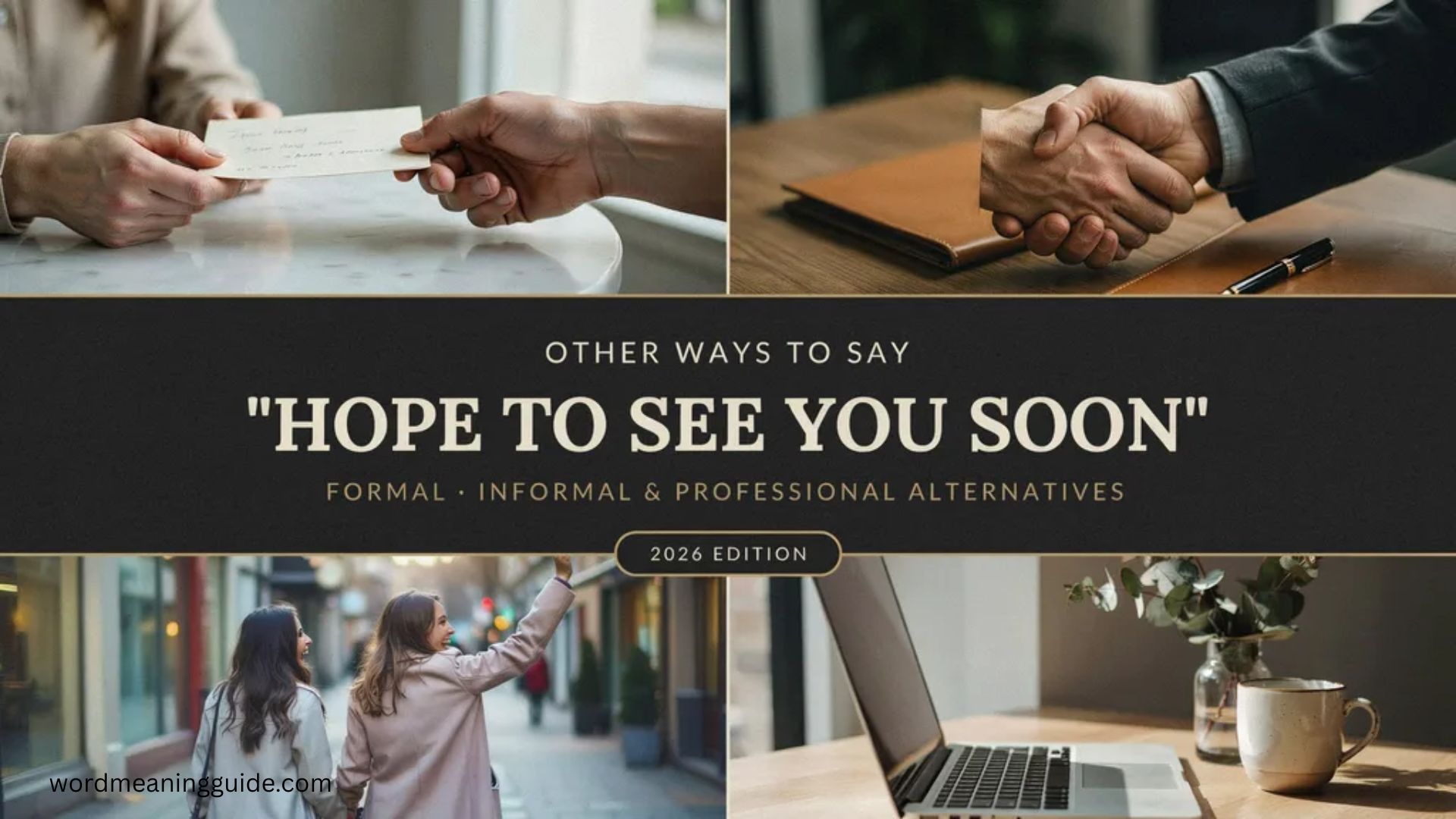
In this comprehensive guide, we’ll explore what “Hope to See You Soon” truly means, when it works, when it doesn’t, and — most importantly — over 30 fresh, expressive alternatives that will make your farewells feel genuinely thoughtful, whether you’re texting a best friend or signing off a formal business letter.
What Does “Hope to See You Soon” Mean?
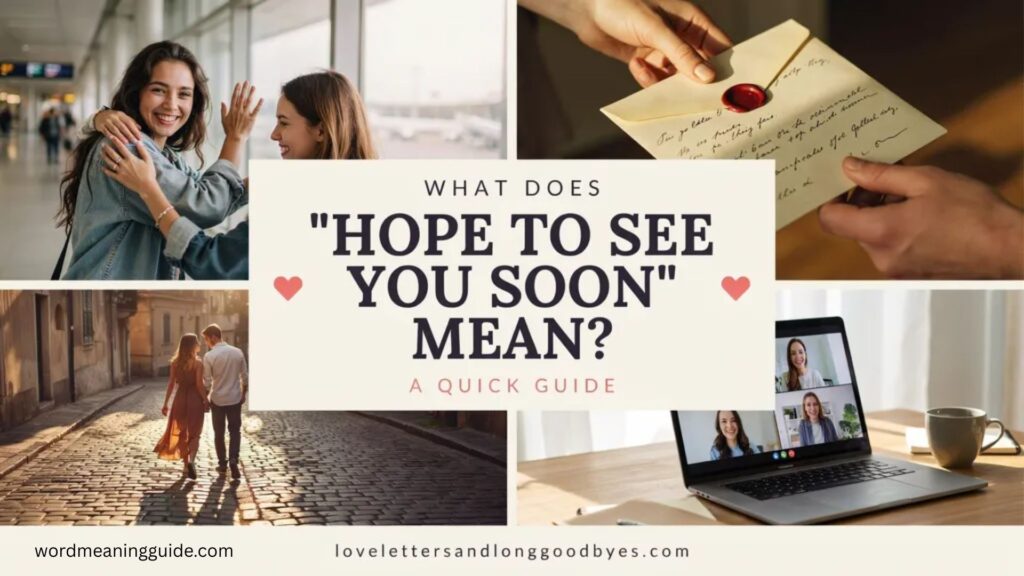
At its core, “Hope to See You Soon” is an expression of genuine desire for future connection. It signals to the other person that their presence is valued and that you’re not quite ready to close the chapter on your time together.
The phrase carries three emotional layers:
- Warmth — it communicates care and affection
- Anticipation — it gestures toward a future meeting
- Hopefulness — the word “hope” implies optimism without pressure
Linguistically, “hope” softens the statement beautifully. It doesn’t demand. It doesn’t assume. It simply expresses a wish — which makes it surprisingly versatile across many social contexts.
However, this very softness can sometimes be its weakness. In professional contexts, “hope” can feel passive. In romantic or deeply personal settings, it might feel insufficiently warm. And in casual text conversations, it can sound almost too formal — like signing a birthday card from a distant relative.
Understanding what the phrase means helps us choose smarter, more context-appropriate alternatives.
When to Use “Hope to See You Soon”
Knowing when to deploy this phrase — and when to swap it for something better — is a skill worth developing. Here are the scenarios where “Hope to See You Soon” genuinely shines:
After casual social gatherings: When you’ve spent time with neighbors, distant friends, or extended family, this phrase wraps up the interaction warmly without over-committing.
In personal emails or cards: Greeting cards and personal notes benefit from this phrase’s gentle, unforced tone.
At the end of networking events: When you’ve met someone interesting but haven’t yet established a deeper relationship, “Hope to See You Soon” keeps the door open without pressure.
During brief encounters: If you’ve bumped into someone unexpectedly and are rushing off, it’s a gracious, quick way to signal appreciation for the moment.
What it’s less ideal for: high-stakes professional correspondence, deeply emotional reunions, or messages to close friends who deserve something more personal and specific.
What Does Hope to See You Soon Mean
This is one of the most frequently asked questions about the phrase — and the answer is nuanced.
Yes, it is polite. The phrase is universally understood as courteous, warm, and socially appropriate. It carries no risk of offense and suits a wide variety of relationships.
As for professional? That depends on your industry and your relationship with the recipient. In creative fields, startups, or casual workplaces, it works fine in email sign-offs. But in more formal sectors — law, finance, corporate communications — phrases like “I look forward to seeing you” or “I anticipate our next meeting” project stronger professionalism and show greater command of formal English.
Communication coach and author of Words That Work, Dr. Frank Luntz, famously noted: “It’s not what you say, it’s what people hear.” That principle applies here perfectly. If your audience hears “Hope to See You Soon” as casual, that impression sticks — regardless of your intent.
So calibrate carefully. The phrase is polite. Whether it’s professional depends on context.
Pros & Cons of Using “Hope to See You Soon”
✅ Pros
- Universal acceptability — almost no one is offended or confused by it
- Warm yet boundary-respecting — implies desire to reconnect without demanding it
- Tone-flexible — works in both written and spoken communication
- Easy to remember and deliver naturally
❌ Cons
- Overused and predictable — it rarely surprises or delights
- Passive phrasing — “hope” lacks the forward momentum of stronger alternatives
- Can feel impersonal — especially in close relationships where something more specific feels more genuine
- May be too casual for formal business writing
- No specificity — it doesn’t hint at when or how you’d like to meet
Quick Alternatives List (One-Line Phrases)
Before diving into the expanded explanations, here’s a fast-reference list of alternatives across contexts:
Formal / Professional:
- I look forward to seeing you
- Looking forward to our meeting
- Anticipating our next encounter
- I hope we have the opportunity to meet again
- I eagerly await our next appointment
Informal / Friendly:
- Can’t wait to see you
- See you soon
- Catch you soon
- Till we meet again
- Miss you already
Warm / Emotional:
- Excited to see you
- Thrilled to reconnect
- Counting down to when we meet again
- Already looking forward to our next get-together
- Can’t wait to catch up
Casual / Texting:
- Can’t wait to hang out
- Talk soon!
- See you around
- Can’t wait to meet up
- Let’s do this again soon
Alternatives (Expanded)
1. I Look Forward to Seeing You
This is the gold standard in professional communication. Clean, confident, and forward-facing — it replaces the passive “hope” with the active “look forward,” which signals genuine enthusiasm without crossing into informality.
Best for: Business emails, formal correspondence, meeting follow-ups
Example: “Thank you for a productive discussion. I look forward to seeing you at next month’s conference.”
The subtle shift from “hope” to “look forward” changes the emotional register entirely. Whereas “hope” sounds like a wish cast into the air, “look forward” sounds like an appointment already on the calendar. It’s purposeful. Decisive. Professional.
2. Can’t Wait to See You
If “I Look Forward to Seeing You” is the formal suit, “Can’t Wait to See You” is the bright, cheerful t-shirt — casual, warm, and bubbling with excitement. It’s one of the most emotionally expressive alternatives on this list.
Best for: Close friends, romantic partners, family members, casual messaging
Example: “It was so good catching up on the phone. Can’t wait to see you next month!”
This phrase works brilliantly because it communicates urgency without pressure. It says: your presence isn’t just something I want — it’s something I’m actively counting down to.
3. See You Soon
Two words shorter and equally effective in casual contexts, “See You Soon” has the confidence of a statement rather than the tentativeness of a hope. It presumes the meeting will happen — which in close relationships, projects lovely optimism.
Best for: Texting, casual conversation, quick goodbyes
Example: “Love you! See you soon!”
Short, punchy, affectionate. It works especially well when spoken aloud, rolling off the tongue naturally and warmly.
4. Looking Forward to Our Meeting
This is the structured, professional cousin of “I Look Forward to Seeing You.” By specifying “our meeting,” it grounds the farewell in a specific, shared event — which adds clarity and purpose.
Best for: Business context, post-interview emails, formal scheduling
Example: “Thank you for your time today. Looking forward to our meeting on Thursday.”
In professional emails, specificity signals respect. This phrase communicates that you’ve taken note of the scheduled time and are engaged.
5. Hope We Meet Again Soon
A gentle, nostalgic alternative that carries a slightly poetic quality. Unlike the original phrase, this one subtly acknowledges that the meeting may not be guaranteed — which can feel more honest and touching in some contexts.
Best for: Farewell messages, acquaintances, travel companions, chance encounters
Example: “It was wonderful getting to know you on this trip. Hope we meet again soon.”
6. Till We Meet Again
This phrase has a timeless, almost literary quality. It carries a bittersweet warmth — a nod to the fact that parting is real, but reunion is desired. It’s particularly resonant in sentimental contexts.
Best for: Long-distance friendships, heartfelt farewells, sentimental messages
Example: “I’ll treasure these memories. Till we meet again, my friend.”
7. Eager to See You
Replacing “hope” with “eager” adds a layer of energy and enthusiasm. It’s warmer than “looking forward” and more professional than “can’t wait.”
Best for: Semi-formal contexts, professional relationships with a personal touch
Example: “Thank you for the invitation. I’m eager to see you and the team at the event.”
8. Catch You Soon
Breezy, modern, and unmistakably casual — “Catch You Soon” is the phrase for the young-at-heart, the text-savvy, and the chronically cool. It’s playful without being flippant.
Best for: Millennial and Gen Z communication, informal messaging, casual friendships
Example: “Gotta run! Catch you soon!”
9. Excited to See You
Direct, warm, and emotionally honest. “Excited” is a powerful word — it reveals genuine feeling without any of the vagueness that “hope” carries.
Best for: Friends, family, personal emails, social media messages
Example: “Just booked my flights! So excited to see you next week!”
10. Looking Forward to Catching Up
This phrase is particularly effective because “catching up” implies shared history. It acknowledges that there’s a gap in time between your meetings and signals that you value filling it in together.
Best for: Old friends reconnecting, colleagues after long gaps, family members
Example: “It’s been way too long! Looking forward to catching up over coffee.”
More Powerful Alternatives (With Context)
11. Excited to Meet You
Perfect for first meetings — a job interview, a first date, or meeting a pen pal in person for the first time. It communicates enthusiasm without presuming familiarity.
Example: “I’ve heard so much about you! Excited to meet you at the event.”
12. Can’t Wait to Catch Up
A step more enthusiastic than “Looking Forward to Catching Up,” this one adds urgency. Ideal for close friends after long separations.
Example: “I have so much to tell you. Can’t wait to catch up!”
13. Excited About Seeing You
Slightly more formal than “excited to see you” because it uses “about” — which adds a hint of contemplative anticipation, as if you’ve been thinking about it.
Example: “Just wanted to say I’m really excited about seeing you this weekend.”
14. Can’t Wait to Hang Out
Completely casual, this phrase is best reserved for friends and younger relationships. It signals a relaxed, fun-focused mindset.
Example: “It’s going to be so fun! Can’t wait to hang out.”
15. Looking Forward to Connecting
Professional and modern, this phrase is especially popular in networking and business development contexts. “Connecting” implies both personal and professional value exchange.
Example: “Thank you for reaching out. Looking forward to connecting next week.”
16. Anticipating Our Time Together
Elegant and emotionally rich, this phrase works best in romantic or deeply personal contexts. It signals that the upcoming time together is something you’re holding in your heart.
Example: “Just a few more days. I’m really anticipating our time together.”
17. Excited to Spend Time With You
Warm, specific, and personal — this phrase makes it clear that it’s not just the meeting you want, but the company.
Example: “It’s been months! I’m so excited to spend time with you.”
18. Can’t Wait to Talk to You
Great for phone-based or video-call relationships, or when you know the upcoming meeting will involve a meaningful conversation.
Example: “I have so many updates. Can’t wait to talk to you!”
19. Looking Forward to Our Chat
Friendly and slightly informal, this works well in professional-but-casual contexts — think startup culture or creative teams.
Example: “Thank you for scheduling this. Looking forward to our chat.”
20. Excited for Our Get-Together
Social, warm, and specific — “get-together” implies a gathering with relaxed, celebratory energy.
Example: “Can’t believe we’re all finally meeting up. So excited for our get-together!”
21. Thrilled to See You
“Thrilled” elevates the emotion to near-delight. It’s enthusiastic without crossing into over-the-top territory when used naturally.
Example: “I’m absolutely thrilled to see you after all these years!”
22. Can’t Wait for Our Meeting
A professional yet warm alternative that combines anticipation with structure.
Example: “Agenda looks great. Can’t wait for our meeting tomorrow.”
23. Looking Forward to Our Conversation
Ideal for intellectual connections — mentors and mentees, colleagues with shared interests, or friends who love a good deep talk.
Example: “Last time we spoke was so inspiring. Looking forward to our conversation.”
24. Can’t Wait to Reconnect
Emotionally resonant for relationships that have had a gap — old friends, estranged family, or colleagues from a previous chapter of life.
Example: “It’s been too long. Can’t wait to reconnect!”
25. Excited to See You Soon
A slight enhancement of the original phrase, replacing “hope” with “excited” to make it more emotionally vibrant.
Example: “Thank you for the wonderful evening. I’m excited to see you soon!”
26. Eagerly Anticipating Seeing You
Formal, eloquent, and ideal for written correspondence where you want to project genuine enthusiasm with polish.
Example: “I’ve been eagerly anticipating seeing you since we last spoke.”
27. Can’t Wait to Meet Up
Casual and direct, perfect for text messages and quick notes to friends.
Example: “Let’s finally make it happen. Can’t wait to meet up!”
28. Looking Forward to Our Hangout
Relaxed and fun-forward — this one paints a picture of quality time ahead.
Example: “Already planning what we’ll do. Looking forward to our hangout!”
29. Looking Forward to Sharing Time With You
Poetic and intimate, this phrase works beautifully in personal letters or heartfelt messages.
Example: “You mean so much to me. Looking forward to sharing time with you this summer.”
30. Excited to Reconnect
A modern, energetic alternative for rekindled connections — especially useful on professional platforms like LinkedIn.
Example: “So glad you reached out. Excited to reconnect!”
Mini Dialogue Examples
Seeing phrases in real context makes them far easier to use naturally. Here are quick dialogue snapshots:
Scenario 1 — Business Email:
“It was a pleasure speaking with you today about the proposal. I look forward to our meeting next Tuesday to review the final details.”
Scenario 2 — Text to a Friend:
“Dinner was amazing tonight! Can’t wait to hang out again soon 😊”
Scenario 3 — Farewell Card:
“Working alongside you has been one of the highlights of my career. Till we meet again — thank you for everything.”
Scenario 4 — Networking Follow-Up:
“Wonderful connecting with you at the summit. Looking forward to our conversation next week.”
Scenario 5 — Long-Distance Family:
“I miss you every single day. Eagerly anticipating our time together this holiday season!”
Mistakes to Avoid
Even with the best intentions, farewell phrases can go wrong. Here are the most common pitfalls:
1. Mismatching tone to context Using “Can’t Wait to Hang Out” in a business email or “I Eagerly Anticipate Our Next Encounter” in a text to your best friend will both feel jarring. Always read the room.
2. Empty enthusiasm Saying “So excited to see you!” when your tone, context, or prior communication suggests otherwise can come across as insincere. Match your energy to the relationship.
3. Overusing the same alternative If you swap “Hope to See You Soon” for “Can’t Wait to Catch Up” in every email, the new phrase loses its freshness quickly. Rotate options.
4. Forgetting cultural context In some cultures, expressing strong eagerness to meet again may feel pushy or presumptuous. When corresponding cross-culturally, more neutral phrases like “I hope we have the opportunity to meet again” are safer.
5. Being too vague when specificity would help If you actually do have a plan to meet, say so! “Looking forward to seeing you next Friday” is far more meaningful than a generic farewell.
Cultural & Tone Tips
Language is culturally coded — a phrase that feels perfectly warm in one context can feel too familiar or too cold in another.
British English: Tends to favour understated warmth. “Looking forward to it” or “Do hope to see you soon” fit the cultural register well.
American English: More openly enthusiastic. “Can’t wait to see you!” or “So excited!” feel natural and genuine.
South Asian communication: Often blends formal and familiar. Phrases like “Hope to meet you soon” with added warmth (“inshallah” in some Muslim communities) carry beautiful cultural resonance.
Professional vs. personal: In professional contexts, always lean toward phrases that convey action and forward momentum (“I look forward to…”) rather than hope (“I hope to…”). The former sounds more decisive.
Gender and relationship dynamics: In romantic contexts, more emotionally expressive phrases (“I’m counting down the days to see you”) can feel deeply meaningful. In platonic contexts, keep the warmth genuine but measured.
Comparison Table of Best Alternatives
| Phrase | Tone | Best Context | Emotional Level |
| I Look Forward to Seeing You | Formal | Business emails | Medium |
| Can’t Wait to See You | Casual | Close friends, family | High |
| See You Soon | Neutral | Any relationship | Low-Medium |
| Looking Forward to Our Meeting | Professional | Workplace | Medium |
| Till We Meet Again | Sentimental | Farewells, letters | High |
| Eager to See You | Semi-formal | Networking, colleagues | Medium-High |
| Catch You Soon | Very casual | Text messages | Low |
| Excited to See You | Warm | Personal messages | High |
| Looking Forward to Catching Up | Friendly-professional | Reconnections | Medium-High |
| Thrilled to See You | Enthusiastic | Personal celebrations | Very High |
| Anticipating Our Time Together | Romantic/intimate | Close relationships | Very High |
| Looking Forward to Connecting | Professional-modern | Networking | Medium |
| Can’t Wait to Reconnect | Emotional | Long-gap friendships | High |
| Excited to Reconnect | Modern-professional | LinkedIn, professional | Medium-High |
Frequently Asked Questions
Is “Hope to See You Soon” grammatically correct?
Yes, it is grammatically correct. It functions as a complete standalone expression of sentiment, even without a subject. The full form would be “I hope to see you soon,” and the shortened version is widely accepted in casual and semi-formal writing.
Can I use “Hope to See You Soon” in a formal email?
It depends on the level of formality required. In moderately formal contexts, it works fine. But for highly formal business communication — especially in fields like law, finance, or senior corporate correspondence — “I look forward to seeing you” is a stronger, more confident choice.
What is the most professional alternative to “Hope to See You Soon”?
“I look forward to seeing you” is the most universally accepted professional alternative. It’s confident, forward-facing, and avoids the passivity of “hope.” “Looking forward to our next meeting” is equally strong when a specific appointment is scheduled.
What should I say instead of “Hope to See You Soon” in a text message?
For texting, casual alternatives work best: “Can’t wait to see you,” “Catch you soon,” “See you soon,” or “Can’t wait to hang out” all feel natural and warm in a texting context.
Are there any romantic alternatives to “Hope to See You Soon”?
Absolutely. “I’m already counting down the days,” “Anticipating our time together,” “Can’t stop thinking about seeing you,” and “Excited to spend time with you” all carry romantic warmth and personal intimacy.
How do I choose the right farewell phrase for my situation?
Ask yourself three questions: (1) What is my relationship with this person — professional, personal, or somewhere in between? (2) What is the tone of our conversation — serious, light, warm, or formal? (3) How much enthusiasm is appropriate — are we close friends or distant acquaintances? Your answers will guide you to the right phrase from the options above.
Is it okay to use “Hope to See You Soon” in a sympathy card or condolence message?
Generally, no. In sympathy or condolence contexts, the phrase can feel inappropriately casual. More suitable closings include “With warmest thoughts,” “Thinking of you,” or “Wishing you comfort and peace.”
Conclusion:
Language is alive. It breathes, shifts, and carries the full weight of our relationships. “Hope to See You Soon” has served us well — it’s polite, warm, and universally understood. But the world of farewell phrases is far richer than that single well-worn expression.
Whether you’re closing a business email with crisp professionalism, sending a heartfelt message to an old friend, or whispering a goodbye at the end of a beautiful evening, there is always a phrase that fits the moment more perfectly than a default.
The phrases in this guide aren’t just words. They’re tiny emotional gifts — each one calibrated to convey something specific: urgency, warmth, excitement, formality, nostalgia, or intimacy. Choosing the right one tells the other person: I thought about this. I thought about you.
And in a world where so much communication is rushed, copy-pasted, and generic, that thoughtfulness makes all the difference.
So next time you reach the end of a conversation, don’t just reach for the familiar. Reach for the true. Find the phrase that means what you actually feel — and say it like you mean it.

Mr. Yaseen is a passionate content creator and language enthusiast dedicated to making words simple and meaningful for everyone. As the author behind WordMeaningGuide.com, he focuses on delivering clear, accurate, and easy-to-understand definitions that help readers improve their vocabulary and communication skills. With a keen eye for detail and a love for language, Mr. Yaseen ensures every piece of content is user-friendly, informative, and valuable for learners of all levels.