There is a moment most of us know well. You finish writing an email, a card, or a farewell message and you stare at the closing line. “Best wishes” feels right, but it also feels a little… automatic. A little like something you type without really meaning it.
Language is alive. The words you choose at the end of a message are not just a formality they are the last impression you leave. They shape how the reader feels after they put your letter down or close your email. According to communication researchers, closing phrases in written correspondence carry measurable emotional weight, influencing how warmth, professionalism, and sincerity are perceived.
So what do you say when “best wishes” starts to feel worn out?
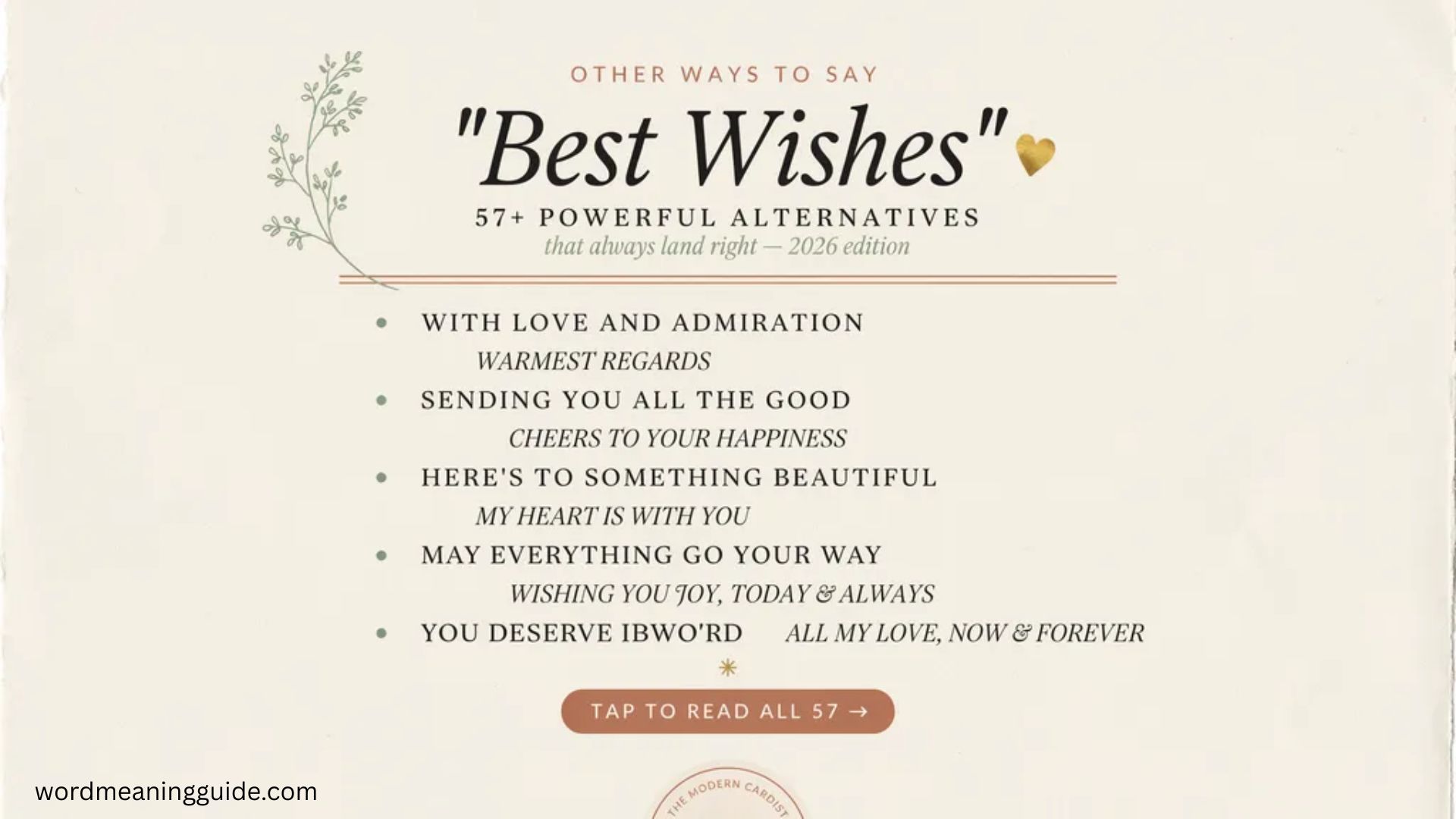
This guide gives you 57+ powerful alternatives organized by tone, context, and purpose so you always have the right phrase ready. Whether you are writing a professional email, a heartfelt card, or a casual text, you will find an option here that fits perfectly.
What Does “Best Wishes” Mean?
“Best wishes” is a closing expression used to convey goodwill toward someone. It essentially means: “I hope good things happen for you.” It is a way of expressing care, support, and positive intention without going into specific detail about what those good things might be.
The phrase has its roots in formal English correspondence and has been a staple of letter writing for well over a century. It sits comfortably in a middle zone between the warmth of “love” and the cool formality of “regards,” which is part of what makes it so widely used and also so generic.
In modern usage, “best wishes” appears in birthday cards, farewell emails, get-well messages, congratulatory notes, and professional sign-offs. It works in many situations, which is exactly why so many people use it without thinking and why finding a more intentional alternative can make your message stand out.
When to Use “Best Wishes”
“Best wishes” works well in several common situations. It is appropriate when you want to be warm but not overly familiar. It suits professional contexts where “love” or “hugs” would feel out of place, but where “sincerely” might feel too stiff.
You might use “best wishes” when writing to someone you do not know very well but want to be genuinely kind toward. It works for milestone moments birthdays, retirements, new jobs, graduations where the occasion calls for optimism and goodwill.
It also appears naturally in farewell messages. When a colleague leaves a company, when a friend moves to a new city, or when a relationship shifts to a more distant one, “best wishes” signals a gracious and hopeful send-off.
That said, the phrase is most effective when it feels chosen rather than defaulted to. And that is where synonyms and alternatives become valuable.
Is It Professional or Polite to Say “Best Wishes”?
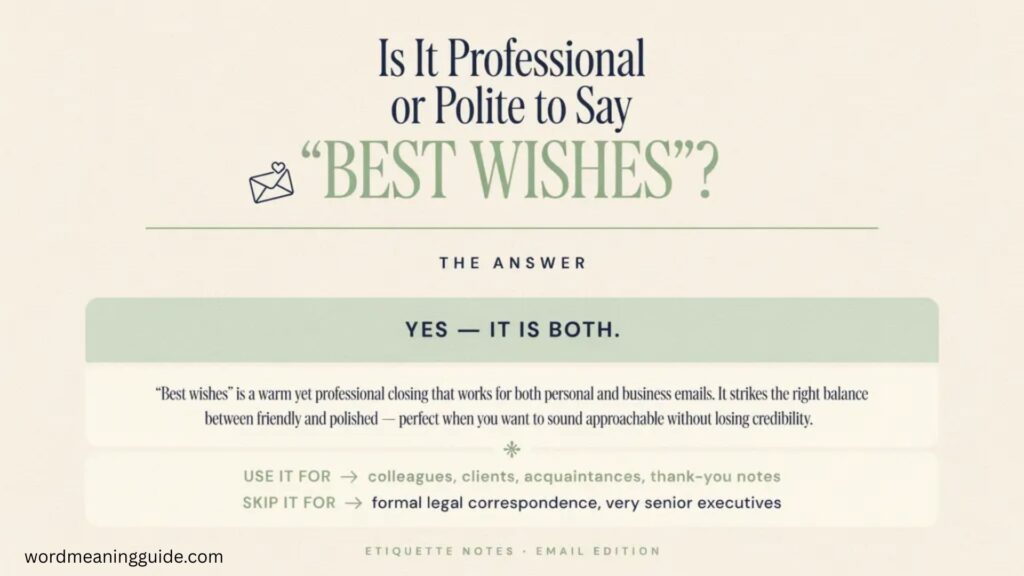
Yes “best wishes” is widely considered both professional and polite. It strikes a tone that is warm without being overly casual and respectful without being cold. In workplace settings, it is generally appropriate for emails, letters, and notes sent to colleagues, clients, and professional contacts.
However, context always matters. A brief internal Slack message might not need any closing phrase at all. A formal business proposal would benefit from something slightly more structured like “kind regards” or “with sincere appreciation.” And a heartfelt personal card might call for something more emotionally resonant than “best wishes.”
Communication expert Dr. Deborah Tannen, whose research on conversational style has influenced how professionals think about language in the workplace, has noted that even small linguistic choices signal our relationship to the other person. The closing of a message, she suggests, is one of those small but meaningful moments where tone is set or broken.
In short: “best wishes” is safe, appropriate, and polite. But safe is not always what you want.
When Should You Use These Alternatives?
The right alternative depends on three things: your relationship with the recipient, the context of the message, and the tone you want to leave them with.
If you are writing to a close friend, something warm and personal like “much love” or “sending you all the good things” will feel more genuine than a formal phrase.
If you are writing to a professional contact you respect but do not know intimately, phrases like “warm regards,” “kind regards,” or “wishing you continued success” hit the right note.
If you are sending a message for a specific occasion a new job, a recovery from illness, a major life transition choosing a phrase tied to that moment, like “here’s to your next chapter” or “wishing you strength and success,” shows intentionality.
And if you are simply looking for variety because you send a lot of messages and “best wishes” has started to feel robotic any of the 57+ options below will give your words fresh energy.
30+ Other Ways to Say “Best Wishes”
1. “Warmest Regards”
This is one of the most polished professional alternatives available. It carries warmth without losing its composed, respectful tone. Use it in emails to clients, colleagues you admire, or anyone you want to impress with your professionalism.
2. “All the Best”
Short, sincere, and versatile. “All the best” communicates the same core sentiment as “best wishes” but with slightly more energy. It feels contemporary and genuine not stiff, not too casual.
3. “Best of Luck”
This one is ideal when someone is heading into something uncertain an interview, a competition, a new venture. It acknowledges the challenge ahead while expressing genuine support.
Discover More 167+Other Ways to Say “Thank You for Your Quick Response” In 2026
4. “Warm Wishes”
A softer version of “best wishes,” this phrase feels more personal and emotionally invested. It works beautifully in cards and personal correspondence.
5. “Wishing You Success”
Direct and motivating. This phrase sends a clear, positive message that you are rooting for the person’s achievements. It is especially fitting for professional milestones.
6. “Kind Regards”
A classic professional sign-off that communicates respect and goodwill. “Kind regards” is widely accepted in formal business writing and is unlikely to ever feel out of place.
7. “Wishing You the Very Best”
This adds emphasis to the standard phrase. The word “very” signals that your goodwill is genuine and heartfelt, not just reflexive. It reads as slightly more personal than “best wishes” alone.
8. “Sending Positive Thoughts Your Way”
Modern, warm, and slightly spiritual in tone. This phrase suggests active intention you are not just wishing well passively, you are sending something. It works well for messages of support during difficult times.
9. “Hope Everything Goes Well”
Conversational and genuine. This works well in messages to friends, casual professional contacts, or anyone in a transitional moment where uncertainty is real.
10. “Cheers to Your Next Chapter”
Celebratory and forward-looking. This phrase is ideal for farewell messages, retirement notes, and anyone embarking on a significant new phase of life. It feels modern and uplifting.
11. “Much Love”
Warm, personal, and emotionally direct. Reserve this for people you are genuinely close to family, dear friends, long-term colleagues who have become more than just coworkers.
12. “Wishing You Happiness”
Simple and profound at the same time. Happiness is a universal aspiration, and this phrase communicates that you want something truly meaningful for the person not just professional success, but genuine joy.
13. “Have an Amazing Day Ahead”
This is a more immediate, energetic phrase. It shifts the focus from long-term wishes to right now this day, this moment. It works well in casual emails and friendly messages.
14. “Best Regards”
A step more formal than “best wishes,” “best regards” is a widely respected professional sign-off. It communicates respect, competence, and goodwill simultaneously.
15. “Wishing You a Bright Future”
Hopeful and expansive. This phrase gestures toward the long game not just the next step, but everything that lies ahead. It suits graduation messages, retirement cards, and moments of major life change.
Explore More 55+ Creative Alternatives to Say Happy Birthday in English In 2026
16. “Here’s to Your Success”
Toast-like in its energy, this phrase is celebratory and confident. It implies you believe success is coming you are simply raising a metaphorical glass to it.
17. “May Your Dreams Come True”
This is poetic and warm. It works beautifully in personal notes, birthday messages, and any context where you want to acknowledge someone’s aspirations directly.
18. “All My Best”
A personal variation on “all the best,” this phrase adds the word “my” to suggest that what you are sending is genuinely yours your real goodwill, not a formulaic sign-off.
19. “Wishing You Strength and Success”
This one is especially meaningful when someone is facing something difficult. It acknowledges both the emotional and practical dimensions of their challenge they will need inner resources, not just good fortune.
20. “Hope It All Works Out Beautifully”
Conversational and optimistic. The word “beautifully” lifts this phrase above the ordinary and suggests that you want more than adequate results you want things to be genuinely wonderful for them.
21. “Stay Blessed”
Warm and spiritually tinged, this phrase is popular across many cultures and contexts. It conveys that you wish continued goodness and grace for the person.
22. “Wishing You Joy and Peace”
This moves beyond success into deeper territory two things that most people truly want but rarely say out loud. Joy and peace are profound wishes, and saying them directly gives this phrase real emotional power.
23. “Hope Your Day Is Full of Good Things”
Cheerful, immediate, and friendly. This is a great choice for casual emails or messages sent in the morning. It is specific without being intrusive.
24. “More Power to You”
Encouraging and assertive. This phrase communicates that you recognize what the person is attempting and you believe in their ability to do it. It has an empowering energy that “best wishes” lacks.
25. “Wishing You Continued Progress”
Professional and forward-looking. This works especially well in business contexts where someone has already achieved notable success you are not just wishing them luck, you are acknowledging their trajectory.
26. “Blessings to You”
Warm, generous, and spiritually resonant. This phrase works across religious and cultural lines as a sincere expression of goodwill. It is especially fitting for deeply personal moments.
27. “Wishing You Everything Wonderful”
Broad, generous, and entirely open-ended. This phrase does not limit what you are hoping for the person it gestures toward everything good in a sweeping, inclusive way.
Also Read This 66+ Better Ways to Say “Please Be Patient” (With Examples) In 2026
28. “Here’s Hoping for the Best”
This one has a gentle, humble quality. It acknowledges that outcomes are uncertain while making clear that your hope is firmly with the other person.
29. “May Good Things Find You”
Poetic and distinctive. Rather than wishing that the person finds good things, this phrase suggests that good things are actively seeking them out a generous and imaginative sentiment.
30. “Hope Your Journey Is Filled with Success”
This is particularly good for messages about new adventures, career shifts, travel, or major life transitions. It frames life as a journey and wishes abundance throughout it.
31. “Every Good Wish to You”
Formal and complete. This phrase suggests that the writer has gathered every possible positive intention and sent it in a single message. It is warm and slightly old-fashioned in the best way.
More Synonyms for “Best Wishes”
Beyond the primary 30, here are additional phrases that communicate similar goodwill, each with its own shade of meaning.
Warmest Wishes
A degree warmer than “best wishes,” this phrase is ideal for personal yet professional correspondence.
With Best Regards
Formal and respectful, suitable for official business communications and professional letters.
Good Luck
Direct and energetic, best used when someone faces a specific challenge or competition.
Take Care
Gentle and personal, this phrase suggests ongoing concern for the person’s wellbeing.
Sending My Best
Casual and warm, appropriate for friendly professional relationships.
Wishing You the Best
Clean, sincere, and versatile.
Much Success to You
Focused and motivating, particularly appropriate in professional or academic contexts.
Heartfelt Wishes
Suggests emotional depth and genuine care.
Many Blessings
Generous and spiritually generous, works across many cultural contexts.
Stay Well
Especially meaningful during times of health challenges or in messages to older recipients.
Sending Good Thoughts
Modern and warm, suggests active positive energy being directed toward the person.
Warm Regards
Professional, balanced, and broadly appropriate.
With Warm Wishes
Slightly more personal than “warm regards,” suitable for messages with an emotional dimension.
Wishing You Joy
Simple and beautiful, conveys a deep and genuine wish.
Also read This TIA Meaning in Text: What It Really Means in Chats, Social Media, and Daily Conversations
Wishing You Great Success
Emphasizes the scale of success you are hoping for.
Hoping for the Best for You
Conversational, humble, and sincere.
My Sincere Wishes
The word “sincere” distinguishes this from a formulaic sign-off.
With Kindest Regards
Polished and professional with a warm edge.
Wishing You All the Happiness
Generous and emotionally expansive.
Best of Everything
Broad and celebratory.
My Warmest Regards
Personal and professional simultaneously.
Wishing You Well
Classic, timeless, and impossible to go wrong with.
Sending My Warmest Wishes
Warm, intentional, and personal.
Bonus Section: Short Polite Alternatives
Sometimes you need something brief. Here are concise options that still carry genuine warmth:
“Take good care.” A simple phrase with a lot of heart behind it.
“All the very best.” Four words that pack real sincerity.
“Rooting for you.” Casual, friendly, and powerfully supportive.
“Go get it.” Energetic and encouraging perfect for someone about to chase something big.
“You’ve got this.” Confidence-boosting and personal.
“With much warmth.” Formal enough for professional settings, warm enough to feel real.
“Until next time.” Perfect for ongoing relationships where you expect to reconnect.
“Onward and upward.” Motivational and forward-focused.
“Here for you.” Personal and supportive.
“Thinking of you.” Simple, warm, and genuinely caring.
Final Writing Tips: How to Choose the Right Phrase
Choosing the right closing phrase is not about finding the most impressive one it is about finding the most appropriate one.
Start by thinking about your relationship with the recipient. Is this person a close friend, a professional contact, or someone you barely know? The level of familiarity should shape your tone directly.
Next, consider the context of the message. A get-well card calls for something different than a congratulations note. A farewell email to a departing colleague has a different emotional weight than a routine business sign-off.
Think about the occasion, too. Specific moments retirements, promotions, recoveries, new chapters deserve phrases that acknowledge what makes the moment unique. “Cheers to your next chapter” means more on someone’s last day at work than “kind regards” does.
Finally, consider how you actually feel. If you genuinely care about this person and want them to know it, choose a phrase that reflects that. Language carries emotional charge. When the phrase you use aligns with what you actually feel, readers sense it even in a brief closing line.
As linguist David Crystal has noted in his work on English usage, the smallest details of written communication punctuation, word choice, closing phrases shape the emotional experience of the reader in ways they often cannot articulate but always feel.
Frequently Asked Questions
What is the most professional alternative to “best wishes”?
“Kind regards” and “warm regards” are consistently ranked among the most professional alternatives to “best wishes.” They maintain a respectful, composed tone while conveying genuine goodwill. “Best regards” is another strong option for formal business correspondence.
Can I use “best wishes” in a business email?
Yes. “Best wishes” is considered professional and appropriate for business emails. It sits in a comfortable middle ground warmer than “sincerely” or “regards” but more restrained than personal expressions like “with love.” For formal correspondence with clients or executives, consider “kind regards” or “warm regards” as slightly more polished options.
What is a warm but not too casual sign-off?
“Warm regards,” “with warm wishes,” and “wishing you well” all strike this balance effectively. They convey genuine care without crossing into personal territory that might feel out of place in a professional context.
What can I say instead of “best wishes” in a birthday message?
For birthday messages, consider “wishing you all the happiness,” “may your dreams come true,” “wishing you joy and peace,” or “here’s to another amazing year.” These phrases feel more specific and celebratory than the generic “best wishes.”
What are some spiritual or blessing-based alternatives?
“Blessings to you,” “stay blessed,” “many blessings,” and “may good things find you” all carry a spiritual or grace-oriented tone. These work well across many cultural and religious contexts and feel genuinely warm and generous.
How do I choose between “regards,” “warm regards,” and “best regards”?
“Regards” is the most neutral and reserved. “Warm regards” adds a layer of personal warmth. “Best regards” signals both respect and positivity. In general: use “regards” for routine professional communication, “warm regards” when you have an ongoing or positive relationship, and “best regards” when you want to close on an upbeat, forward-looking note.
Is “all the best” too casual for professional emails?
Not necessarily. “All the best” is widely used in professional settings, particularly in less formal industries and in correspondence between colleagues who know each other. In very formal business contexts legal letters, official communications you might prefer “kind regards” or “best regards.” But for most workplace emails, “all the best” reads as warm, sincere, and entirely appropriate.
What closing phrase is best for someone going through a difficult time?
When someone is facing illness, loss, or hardship, phrases like “sending positive thoughts your way,” “wishing you strength and peace,” “stay well,” and “thinking of you” communicate empathy and care without feeling hollow or dismissive. These phrases acknowledge the emotional reality of the moment.
Conclusion
Words matter even the ones we almost do not notice, like the closing line of an email or card. “Best wishes” has served us well for a long time. It is polite, sincere, and versatile. But language has more range than any single phrase can capture.
The next time you finish a message and hover over the closing line, you now have 57+ intentional alternatives to choose from. Each one carries its own tone, warmth, and emphasis. The right choice does not just end your message it completes it. It tells the reader how you feel about them, what you hope for them, and how much care went into every word you wrote.
So choose well. Because the last thing you say is often what people remember most.

Mr. Yaseen is a passionate content creator and language enthusiast dedicated to making words simple and meaningful for everyone. As the author behind WordMeaningGuide.com, he focuses on delivering clear, accurate, and easy-to-understand definitions that help readers improve their vocabulary and communication skills. With a keen eye for detail and a love for language, Mr. Yaseen ensures every piece of content is user-friendly, informative, and valuable for learners of all levels.